
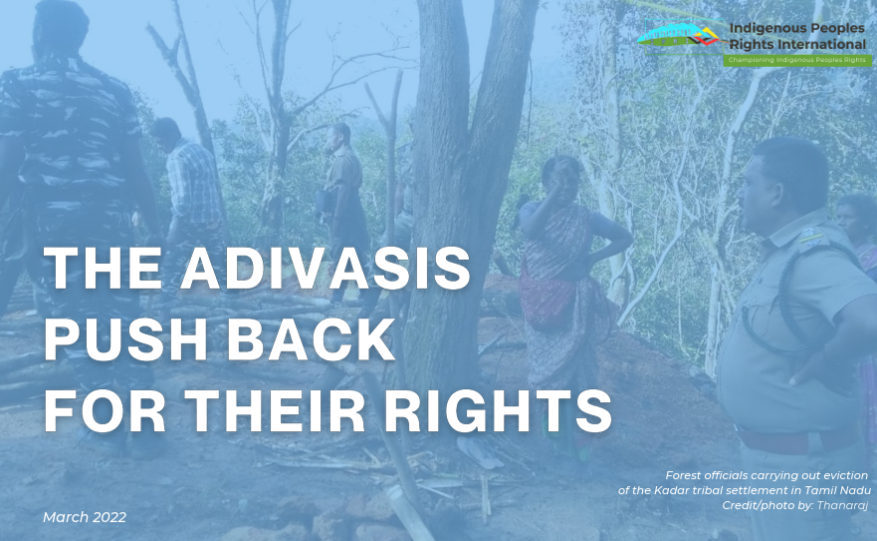
Holi est l’une des principales fêtes en Inde et elle est célébrée avec beaucoup d’enthousiasme et de joie dans les zones rurales. Des plans élaborés sont faits pour asperger de couleurs leurs proches. Mais cela n’a pas été le cas pour les 16 femmes et huit hommes appartenant à la tribu Lambada qui, à la veille de Holi, le 27 mars 2021, sont entrés dans la réserve de tigres d’Amrabad, dans la forêt de Nallamala, district de Nagarkurnool, dans l’État de Telangana, au centre-sud de l’Inde.
Les membres de cette communauté tribale, ou Adivasis, se sont rendus dans la forêt pour cueillir des fleurs de mahua, qui constituent une source essentielle de subsistance pour eux. La fleur de mahua (Madhuca indica) est un produit forestier important pour les communautés tribales, qui la récoltent pour l’alimentation et pour la fabrication d’alcool. Classée comme produit forestier, la mahua est réglementée par les lois étatiques sur les accises, qui exigent des permis pour sa collecte et son stockage, moyennant des frais de licence modiques.
Au milieu de la nuit, alors que les membres de la communauté tribale dormaient dans la forêt après avoir récolté les fleurs, ils ont été soudainement attaqués par des agents et employés forestiers. Les Adivasis ont été contraints de se déshabiller et ont été violemment battus. Les victimes ont subi des blessures à la tête, comme K. Patya, âgé de 48 ans, et même une femme de 70 ans a été maltraitée. Les autres femmes et hommes adivasis, dont les noms n’ont pas été divulgués, ont également été forcés de se déshabiller et ont été torturés.
Quelques jours plus tard, malgré une chaleur accablante, les Lambadas lésés, y compris des femmes autochtones âgées et de nombreuses autres personnes souffrant de blessures à la tête et aux membres, ont organisé un sit-in de protestation devant les bureaux de la Commission des droits de l’homme de l’État de Telangana (TSHRC) à Hyderabad. Les manifestants ont raconté comment ils avaient été agressés par des agents forestiers.
L’une des victimes, K. Anchali, âgée de 49 ans, a déclaré : « Nous exigeons la démission du DFO [District Forest Officer] et nous déposons des plaintes contre les agents forestiers en vertu de la loi sur la prévention des atrocités contre les castes et tribus répertoriées (SC/ST). »
Sur la base de la plainte pour graves violations des droits humains et entrave aux moyens de subsistance des populations tribales, la TSHRC a ordonné aux autorités forestières de Nagarkurnool de fournir une explication écrite concernant l’incident et de comparaître devant la commission lors de l’audience prévue le 26 avril.
Après avoir rencontré plusieurs associations tribales du Telangana, la ministre du bien-être tribal de l’État, Satyavathi Rathod, a assuré aux victimes qu’elles recevraient des soins médicaux et que des mesures appropriées seraient prises à l’encontre des agents forestiers responsables de l’attaque, garantissant ainsi justice à la communauté lésée.
Mais au lieu de cela, les Lambadas ont été poursuivis en vertu de la loi sur la protection de la faune de 1972 (Wildlife Protection Act, 1972) pour entrée non autorisée dans la réserve de tigres, prélèvement ou destruction de produits forestiers, utilisation de bois de chauffage pour cuisiner et port d’armes à l’intérieur de la réserve.
Les Lambadas ont ainsi été criminalisés et soumis à un harcèlement judiciaire, malgré le fait que les tribus répertoriées ont le droit de collecter, utiliser et disposer des « produits forestiers mineurs » (y compris la fleur de mahua) provenant des terres forestières, définies comme « toute terre située dans une zone forestière, y compris les forêts non classées, non délimitées, existantes ou réputées, les forêts protégées, les forêts réservées, les sanctuaires et les parcs nationaux » en vertu de la loi sur les droits forestiers de 2006 (Forest Rights Act, 2006).
Le cas du peuple Lambada est l’un des nombreux cas documentés de violations des droits d’autres peuples autochtones qui composent les 104,3 millions de tribus répertoriées (Scheduled Tribes – ST), également appelées populations tribales ou Adivasis en Inde. Ils représentent 8,6 % de la population totale du pays.
Environ 90 % des ST vivent dans des zones rurales, sans accès aux services et infrastructures de base. Le recensement de 2011 a montré que seulement 59 % des ST sont alphabétisés, avec un taux de 68,50 % chez les hommes et de 49,40 % chez les femmes.
Les tribus répertoriées (ST) bénéficient en principe d’une protection de leurs terres et d’autres questions sociales en vertu de la Cinquième annexe de la Constitution en Inde continentale et de la Sixième annexe dans la région du Nord-Est. Aucune loi du Parlement ou des assemblées législatives des États ne s’applique à une zone répertoriée, sauf si le gouverneur en décide autrement par notification publique, celui-ci pouvant également adopter des règlements visant à interdire ou à restreindre le transfert de terres à des non-tribaux.
Les dispositions de la loi de 1996 relative aux Panchayats (extension aux zones répertoriées) (PESA) confèrent d’importants pouvoirs à la Gram Sabha, ou assemblée villageoise, notamment en matière d’acquisition de terres et d’approbation des plans, programmes et projets, et la PESA s’applique dans les zones relevant de la Cinquième annexe.
En outre, le ministère des Affaires tribales a été créé en 1999 afin de veiller au développement et au bien-être des tribus répertoriées.
Mesures administratives pour la protection des peuples autochtones en Inde
En février 2004, la Constitution de l’Inde a été modifiée afin de scinder la Commission nationale pour les castes et tribus répertoriées en deux commissions distinctes (la Commission nationale pour les tribus répertoriées et la Commission nationale pour les castes répertoriées), chargées de superviser la mise en œuvre des différentes garanties qui leur sont accordées.
Des tribunaux spéciaux ont été établis à travers le pays pour juger les infractions commises en vertu de la loi de 1989 sur la prévention des atrocités à l’encontre des castes et tribus répertoriées.
Les droits des tribus répertoriées sont également protégés par des lois spéciales telles que la loi de 1989 sur la prévention des atrocités contre les castes et tribus répertoriées (SC/ST), la loi de 2006 sur les droits forestiers, ainsi que la loi de 2013 sur le droit à une indemnisation équitable et à la transparence dans l’acquisition des terres, la réinstallation et la réhabilitation, qui s’appliquent à l’ensemble du pays.
Ces législations ont été adoptées dans le contexte des injustices historiques subies par les populations tribales de la part des anciens pouvoirs et de la société. En 1871, le Parlement britannique avait adopté la loi sur les tribus criminelles (Criminal Tribes Act), classant plus de 200 tribus comme criminelles héréditaires et habituelles, stigmatisant ainsi des générations entières de ces communautés tribales.
Après l’indépendance, le gouvernement indien a abrogé la loi sur les tribus criminelles en 1952 et les tribus dites « criminelles » ont été « dénotifiées ». Cependant, cette loi a été remplacée par la loi de 1952 sur les délinquants d’habitude (Habitual Offenders Act), qui, au lieu d’améliorer leur situation, a fini par les stigmatiser à nouveau.
Since then, the number of crimes and atrocities against the Scheduled Tribes has steadily increased in recent years. According to the report “Crime in India 2020” of the National Crime Records Bureau (NCRB) under the Ministry of Home Affairs, the number of crime/atrocities committed against the Scheduled Tribes was 6,528 cases in 2018, 7,570 cases in 2019, and 8,272 cases in 2020.
The creation of the NHRC
On October 12, 1993 the National Human Rights Commission (NHRC) of India was established under the Protection of Human Rights Act (PHRA), 1993 which was amended in 2006 and 2019. Section 2(1) (d) of the PHRA defines Human Rights as the rights relating to life, liberty, equality and dignity of the individual guaranteed by the Constitution or embodied in the International Covenants and enforced by the courts in India. With its ‘A’ status given by the Global Alliance of National Human Rights Institutions (GANHRI) in Geneva, the NHRC is in compliance with the Paris Principles which are the international minimum standards required for human rights institutions to be considered legitimate, credible and effective in human rights promotion and protection.
The NHRC of India is headed either by a former Chief Justice or a former Judge of the Supreme Court, with five (including three non-judicial) members who are appointed by the President of India upon recommendation of a committee consisting of the Prime Minister as Chairperson. The five members of this committee are the Speaker of the Lower House of Parliament, Minister of Home Affairs, Leader of Opposition in the Lower House of Parliament, Leader of Opposition and Deputy Chairperson in the Upper House of Parliament. The seven ex-officio members in the NHRC are the Chairpersons of the National Commission for Backward Classes, the National Commission for Minorities, the National Commission for Scheduled Castes, the National Commission for Scheduled Tribes, the National Commission for Protection of Child Rights, the National Commission for Women, and the Chief Commissioner of Persons with Disabilities.
Roles of NHRC in addressing human rights violations
The NHRC is tasked to inquire on petitions concerning violation of human rights, or abetment, or negligence in the prevention of such violation by a public servant. It can also intervene in any proceeding involving any allegation of violation of human rights pending before a court with the approval of such court. It can visit any jail or other state-controlled institutions where persons are detained for purposes of treatment, reformation or protection, to look into the living conditions of the inmates and make recommendations to the Government.
The Commission reviews the safeguards provided by the Constitution or any law in force for the protection of human rights and recommends measures for their effective implementation; and reviews also the factors, including acts of terrorism that inhibit the enjoyment of human rights and recommend appropriate remedial measures.
The Commission studies treaties and other international instruments on human rights and makes recommendations for their effective implementation and undertakes and promotes research in the field of human rights. Through publications, the media, seminars and other available means, the NHRC broadens human rights literacy among various social sectors and promotes awareness on safeguards available for the protection of rights. It encourages the efforts of non-governmental organisations and institutions that work in the field of human rights.
Although the NHRC can investigate violation of human rights of all including the Scheduled Tribes, the Government of India established the National Commission for Scheduled Tribes (NCST) in February 2004 with the mandate to safeguard the rights of the Scheduled Tribes. However, the NCST presently does not have the necessary members and is functioning with only the Chairperson and one member.
Taking action on human rights violations: IRAC’s Intervention
Upon learning of the human rights violation cases of tribals, the Indigenous Rights Advocacy Centre (IRAC) filed a complaint before the National Human Rights Commission against the erring forest officials responsible for the attack on the Lambada tribals (NHRC Case No. 1086/36/22/2021). Each day, IRAC staffs monitor and document cases of human rights violations including violence against, criminalization of, and impunity against Indigenous Peoples in India.
They try to overcome the challenges of monitoring cases of human rights violations in the country’s vast geographical expanse. IRAC’s intervention in cases and engagement with the NHRC covers the length and breadth of the country from Assam/Manipur in the northeast to Gujarat in the west; from Jammu and Kashmir in the north to Tamil Nadu in the south.
Brief introduction/background of IRAC
IRAC was established in the year 2020. The vision of the organization is to promote, protect and defend the rights and interests of the tribal communities/Adivasis/Indigenous Peoples in India. As a means of achieving its objectives, IRAC seeks to combine practice, research, advocacy and collaboration as an effective method to promote, protect and defend the individual and collective rights of Indigenous Peoples.
IRAC adopted a monitoring system using secondary sources such as credible national as well as regional newspapers, online news portals, and social media handles of prominent human rights non-government organizations (NGOs) and rights activists. Primary information is collected through a network of NGOs and activists/community leaders at the grassroots level, and runs a free Legal Helpline where cases of human rights violations are reported. Verification of the secondary sources is done through a network created by IRAC composed of journalists and human rights activists who work effectively and share information with IRAC. Several of the cases documented by IRAC have led to filing of complaints before the NHRC which is mandated to protect, defend and promote human rights under the Protection of Human Rights Act of 1993.
The interventions made by IRAC were appreciated and supported by NHRC as they complement each other’s tasks and advocacies. The cases forwarded by IRAC to NHRC tested the latter’s determined pursuit of its mandate as it has all the powers of a civil court trying a suit under the Code of Criminal Procedure, 1908.
After receiving a complaint, the Commission can call for information or report from the Central or State Government or any other authority within a specified time. If reports sought are not submitted on time, the NHRC issues reminder or summons the officials for physical appearance before it at the New Delhi office. After completion of enquiry into the human rights violation, the Commission can recommend to the concerned Government authority for payment of compensation to the complainant/victim and to initiate proceedings to prosecute the perpetrator(s). The NHRC can also approach the Supreme Court or the High Court concerned for such directions, orders or writs as that Court may deem necessary.
Between July 1, 2021 and December 31, 2021, IRAC’s database reveals that the organization intervened in 77 cases of human rights violations against Indigenous Peoples by way of complaints filed before the NHRC.
The IRAC intervened in these cases to ensure justice, claim reparation for the victims and their families, and to establish accountability by punishing the culprits to reduce, if not to eradicate impunity. At least 27 235 Indigenous Peoples are direct beneficiaries of these 77 cases.
Of the total interventions, 44 out of 77 cases, or 57 per cent were on criminalization of Indigenous Peoples committed by the police, forest department and other public officials. The remaining 33 cases were atrocities committed by non-state actors/non-tribals and denial of basic documents and welfare schemes by the Government. The IRAC regularly followed up these cases with the NHRC to ensure justice for the indigenous victims.
The Need for Continuing Advocacy for Adivasis’ Rights
The list of cases documented and monitored by IRAC illustrates the breadth and depth of violation of individual and collective rights being committed against Indigenous Peoples despite laws to protect them and their territories and resources.
Besides the torture of several men and women of the Lambada tribe in Nagarkurnool district, Telangana by forest officials, the list includes the case of forest officials and staff who forcibly evicted tribal people by burning down their huts in Palampattu hills in Tamil Nadu in July 2021.
Then there was the case of bonded labour at Pilanje Budruk Chinchpada village in Bhiwandi, Thane district of Maharashtra. For generations, 18 Katbari tribal families were inhumanely treated with public flogging, starvation, and enslavement by two brothers who are contractors operating a brick kiln factory and sand stone quarry. The owners, Chandrakant and Rajaram Patil forced the tribals to work without proper pay, food or water and forced them to work to repay loans allegedly taken by their forefathers, and prohibited them from looking for other jobs. All those times, the brothers were in collusion with the police.
Custodial death due to alleged torture in police custody was the case of 35 year-old Bhim Kale, a member of the Phase Pardhi tribe. He died while in illegal police custody at Vijapur Naka police station in Solapur district, Maharashtra on October 3, 2021. A 19-year-old tribal girl was confined and sexually abused by her employer in Kerala. After escaping she reached her home in Madhya Pradesh but the Village Panchayat passed an order to either return to her employer or pay him Rs 2 Lakhs(200000 INR). Likewise, the case of a 35-year-old tribal woman who was brutally raped in Basna in Mahasamund district of Chhattisgarh on September 17, 2021 is a stark example of violence against indigenous or tribal women. These cases involve grave violation of the human rights of the survivors and their families.
The list of cases documented by IRAC is a long one: threat of forced eviction, alleged fake encounter killing, tortured to death in police custody, torture by police (not leading to death), tortured to death by non-tribals, torture (not leading to death) by non-tribals, arrest on false charges, filing of false charges (not leading to arrest), malnutrition deaths/starvation, land grabbing by the forest department, injury in police firing, killing by Maoists, harassment of indigenous human rights defender, and denial of right to education.
Other cases are mainly related to denial of government food grain, official documents, development schemes and facilities. The interventions made by the IRAC range from civil and political rights to economic, social and cultural rights. These manifest the continuing denial and repression of the collective rights of Indigenous Peoples to their lands, territories and resources, and their traditional livelihoods. Likewise, these cases are also clear violations of the obligations of the State of India under the International Covenant on Economic, Social and Cultural Rights and the International Convention on the Elimination of All Forms of Racial Discrimination which India has ratified.
In the case of the victims of bonded labor, a long detailed list of questions on violation of or compliance with labor laws and Supreme Court orders was issued for a thoroughgoing investigation to verify and validate commission of crime by the accused sibling contractors and inaction of officers and collusion with police elements.
The NHRC, while reminding the concerned authorities of their tasks of adhering to the law, particularly provisions on the rights of Indigenous Peoples, likewise orders prompt reply to its queries.
India is infamous for impunity where majority of cases are committed by the perpetrators who belong to upper castes and go scot-free due to lack of proper investigation by the police. This reality has resulted in only 28.5% conviction rate for crimes/atrocities against Scheduled Tribes in 2020. While India has numerous laws to respect and protect the rights of Adivasis including affirmative laws against their discrimination, its enforcement is very weak due to the prevailing power imbalance in the political and social structures that continue to perpetrate systemic discrimination, racism and social inequity.
The interventions of IRAC with the National Human Rights Commission (NHRC) are primarily aimed at establishing accountability for the crimes committed against Indigenous Peoples and ending impunity enjoyed by the accused persons. As a quasi-judicial institution, NHRC holds regular sittings to decide and rule on the complaints and issues timely orders.
The IRAC’s interventions with the NHRC have been highly effective and successful in obtaining positive interim orders in favor of the victims in several cases. The IRAC is the partner of IPRI in India in addressing the criminalization of and impunity against Indigenous Peoples. Through this collaboration, IRAC was able to monitor, document and submit cases of human rights violations to the NHRC and other relevant bodies, as well as undertake awareness-raising and advocacy activities.


