
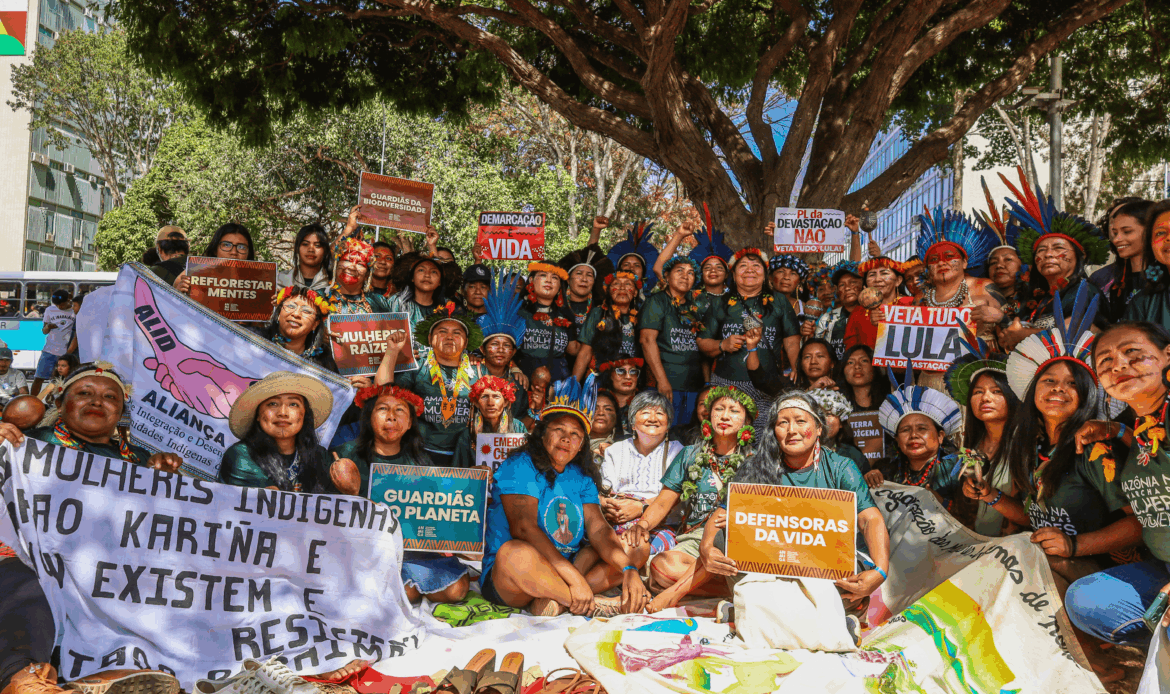
Many people say COP30 ( gathering of global leaders to tackle climate change) in Belém will be chaotic — that the Amazon city isn’t ready for the size of the crowd expected. Hotels are full, logistics are uncertain, and some organizations have already decided not to go.
But for me, that’s precisely why I will be there.
Belém is not just another venue. It was chosen with purpose — to bring the world to the entrance of the Amazon, to the lands and territories of Indigenous Peoples who have cared for this forest since time immemorial. The Government of Brazil wanted to make this the “Indigenous COP,” and for us, that is deeply meaningful. It acknowledges, even if symbolically, that the Amazon — and the world’s climate — depend on the protection of Indigenous territories and the recognition of our rights.
For Indigenous Peoples in Brazil and beyond, COP30 is not an ordinary COP.
In the past two years, these conferences were held in countries that restricted civil society and prioritized corporate access. The spaces for critical voices were shrinking, the atmosphere subdued, and the negotiations timid and uninspired.
Belém offers a turning point. Here, Indigenous Peoples and social movements can once again be visible, vocal, and united. We will not be confined to side events or photo opportunities — we will be present in the streets, in the discussions, and in the global narrative. This is where we reclaim our space in shaping real climate action, grounded in justice, rights, and the protection of life and nature.
I do not hold illusions that COP30 will suddenly fix the climate crisis or deliver the strong, decisive outcomes the planet needs. But I see opportunities — small but important — for progress in areas like climate finance and the just transition.
We are demanding that these discussions move beyond rhetoric and address the realities on the ground. Climate finance must reach those protecting the ecosystems that sustain us all . The just transition must ensure the protection of our rights and not be another form of green colonialism, where Indigenous lands are exploited and we are again evicted by mining for transition minerals and energy projects.
More than 3,500 Indigenous delegates will gather in Belém — from the Amazon, from other regions of the world. Together, we will amplify our shared message:
We are the answer. We are the solution. We are here to stay.
These words reflect our lived reality. they are a declaration of existence, resilience, and purpose. As the world searches for ways to heal the Earth, Indigenous Peoples will be there — not as victims or symbols, but as rightful leaders and partners in shaping a sustainable and just future. We are protecting more than 50% of the world’s remaining biodiversity. Our territories store carbon, sustain water systems, and offer pathways for resilience. Yet, we continue to face threats, criminalization, and displacement in the name of development, conservation and climate solutions.
In Belém, we will not only call out these injustices — we will also show the world what true climate solutions look like: rooted in land rights, Indigenous governance, and the interdependence between people and nature.
I am going to COP30 because it matters.
Because the Amazon is the beating heart of our planet — and this is where the fight for our collective future must be heard.
