
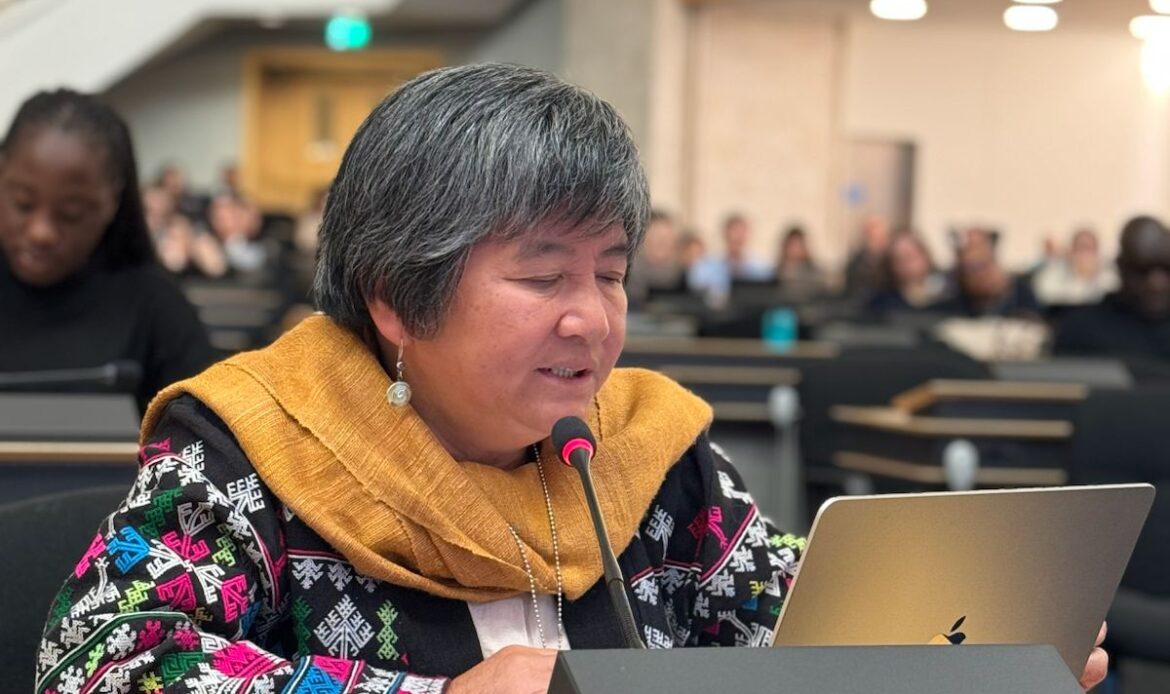
Intervention during the panel: Advancing the Just Transition During Times of Crises
UN BHR Forum, November 25, 2025
By Joan Carling
The Renewable energy industry is at a crossroads: not only is it building the infrastructure of our future global energy system, but it also has the potential to contribute to a fairer global economic order through a rights-respecting energy transition, where Indigenous Peoples must be leaders.
If the opportunity for a just transition is to be realized, private-sector and state commitment to Indigenous Peoples’ rights and transformative business models designed to deliver shared prosperity for and with Indigenous Peoples is non-negotiable. These need to align with Indigenous Peoples’ self-determined priorities. The Business and Human Rights Resource Center- BHRRC and my organization, the Indigenous Peoples Rights International, have documented examples of benefit-sharing and co-ownership with Indigenous Peoples in Canada, New Zealand, Australia, and elsewhere. Private sector and state commitment to the three key Just Energy Transition Principles is essential: shared prosperity, corporate human rights due diligence, and fair negotiations and agreements. This requires their commitment to core processes and practices that recognize IPs as equal partners in negotiation, design and project implementation, ensure respect for their rights, including the right to Free, Prior and Informed Consent (FPIC), and place value on Indigenous knowledge, experience, governance and decision-making processes. This provides a critical foundation for transformative partnership models for a genuine just energy transition.
Leading renewable energy companies are taking important steps to break with the trajectory of historical injustices associated with land-based industries. The latest edition of the BHRRC’s 2025 Renewable Energy Benchmark, released this fall, found that despite political and financial headwinds, the sector is making some progress on improving its core human rights policies and practices:
However, some crucial gaps remain:
Only 2 of 22 companies have sufficient policies in place regarding Indigenous Peoples’ rights, and only 1 has a policy on free, prior, and informed consent (FPIC).
While there has been clear improvement in meaningful engagement with communities, companies must make progress on benefit-sharing agreements that will see tangible results for communities.
Responsible mineral sourcing remains a nascent practice; only one solar panel manufacturer and only three wind turbine manufacturers have sufficient policies in place.
No company in the Benchmark currently publicly discloses its complete solar supply chain, which is a critical element for addressing the risk of exposure to the severe issue of forced labour in the Xinjiang Uyghur Autonomous Region (XUAR), as referred to by UN experts.
Despite progress on policies on Human Rights Defenders HRDs, important gaps in the implementation remain as we continue to record attacks on HRDs related to all Renewable Energy subsectors, with Indigenous HRDs among the most affected. We need more substantial and decisive progress in these four key areas:
Responsible mineral sourcing; Respect for Indigenous Peoples’ rights; Commitment to shared prosperity; and Respecting and protecting human rights defenders
Let me also share that COP30 agreement on the Just Transition Work Programme adopted affirmative language on Indigenous Peoples, which states “ The importance of the rights of Indigenous Peoples and of obtaining their free, prior and informed consent in accordance with the United Nations Declaration on the Rights of Indigenous Peoples, and the importance of ensuring that all just transition pathways respect and promote the internationally recognized collective and individual rights of Indigenous Peoples, including the rights to self-determination, and acknowledge the rights and protections for Indigenous Peoples in voluntary isolation and initial contact, in accordance with relevant international human rights instruments and principles”. We expect States, energy companies, and investors to change the way they engage with Indigenous Peoples by implementing this agreement. Thank you.
