
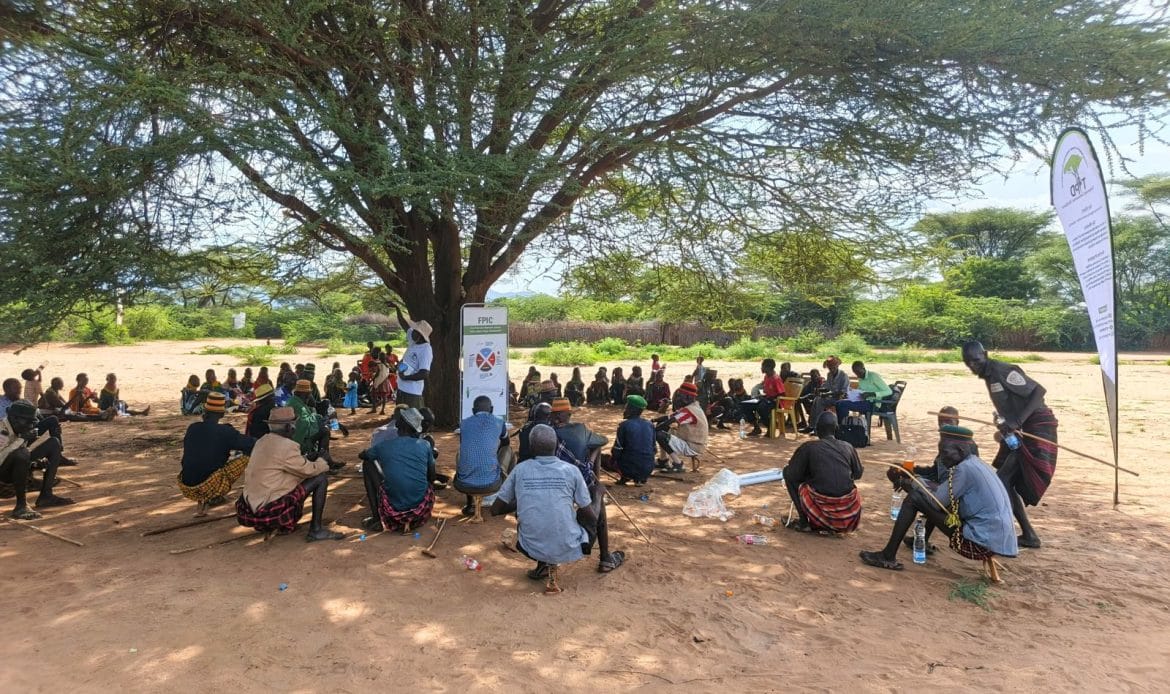
The Indigenous Peoples Rights International (IPRI) expresses its solidarity with the Indigenous Turkana Peoples of Kenya, whose rights to their lands and territories, culture, health, and self-determination are under severe threat due to an ongoing process of compulsory land acquisition by Kenya’s National Land Commission to extend oil exploitation in Turkana lands.
The current compulsory acquisition process — undertaken without genuine free, prior, and informed consent (FPIC) — violates the Turkana Peoples’ rights to their ancestral lands and to self-determination. It also risks intensifying the environmental and social damage already experienced in the region. Promised development benefits have not materialized for the communities. Instead, funds intended for Indigenous inhabitants have reportedly been misappropriated by local authorities, leaving Indigenous communities with minimal benefits while bearing the full costs of extraction.
Oil was discovered in 2012 in the Lokichar Basin in Turkana County, an area traditionally stewarded by Indigenous pastoralist communities. What was presented as a milestone for national development has instead become a struggle over land, dignity, and survival for the ancestral inhabitants of these territories.
From the outset, oil extraction in Turkana has advanced without respecting the rights of the Turkana People nor their FPIC, in contravention of relevant international and regional human rights standards, including the United Nations Declaration on the Rights of Indigenous Peoples, the jurisprudence of the African Court on Human and Peoples’ Rights, and the observations and recommendations of UN Treaty Bodies and Special Procedures.
Since extraction began, communities have faced serious and ongoing harm:
- Toxic contamination: Improper storage and handling of oil-related waste has resulted in chemical runoff into water sources used by communities and livestock, creating significant health and environmental risks.
- Loss of grazing lands: Traditional pastoralism — central to Turkana culture, food security, and identity — has been disrupted as grazing routes and communal lands are converted into extractive infrastructure.
- Dispossession and inadequate compensation: Families have lost access not only to land, but also to water points, grazing corridors, and traditional resources, often receiving inadequate or no compensation.
Despite constitutional and statutory protections for community land, compensation funds intended for local Indigenous landowners have reportedly been diverted, undermining legal safeguards and deepening community mistrust.
Rather than addressing these harms, authorities are advancing a new compulsory land acquisition process (Gazette Notice No. 14647 of 2025 (CXXVII–No. 209, dated 9 October 2025) affecting land formally registered as community land belonging to the Turkana Indigenous Peoples under Article 63(2) of the Constitution of Kenya and Article 2 of the Community Land Act (Cap. 287). Proceeding with compulsory acquisition of titled community land without genuine FPIC is contrary to Kenya’s Constitution and its international human rights obligations.
Community members and defenders seeking accountability have faced threats, harassment, and intimidation. Those raising concerns about environmental harm and land rights violations have been subjected to pressure and targeting, creating a climate of fear that undermines the safety of Indigenous land defenders.
IPRI Calls On:
The Government of Kenya to:
- Immediately halt compulsory land acquisition affecting titled Indigenous lands undertaken without genuine FPIC.
- Ensure independent environmental monitoring in cooperation with affected Indigenous communities and full remediation of contaminated sites.
- Establish transparent, community-led, and legally compliant benefit-sharing mechanisms.
- Adopt and guarantee the legal recognition and protection of Indigenous peoples’ right to lands, territories
- Adopt and enforce measures to protect Indigenous land defenders and investigate and prosecute any acts of intimidation.
International partners, investors, and development agencies involved in the project to:
- Conduct and uphold heightened human rights due diligence in line with international standards.
- Adopt a clear and enforceable policy on zero tolerance for human rights violations
The situation in Turkana reflects a broader global pattern in which extractive projects advance under development narratives while Indigenous rights, ecological integrity, and community well-being are sidelined.
Respect for Indigenous Peoples’ rights is not optional. It is a legal obligation and a prerequisite for justice, sustainability, and lasting peace.
Photo: Turkana Indigenous Peoples Action for Development
