
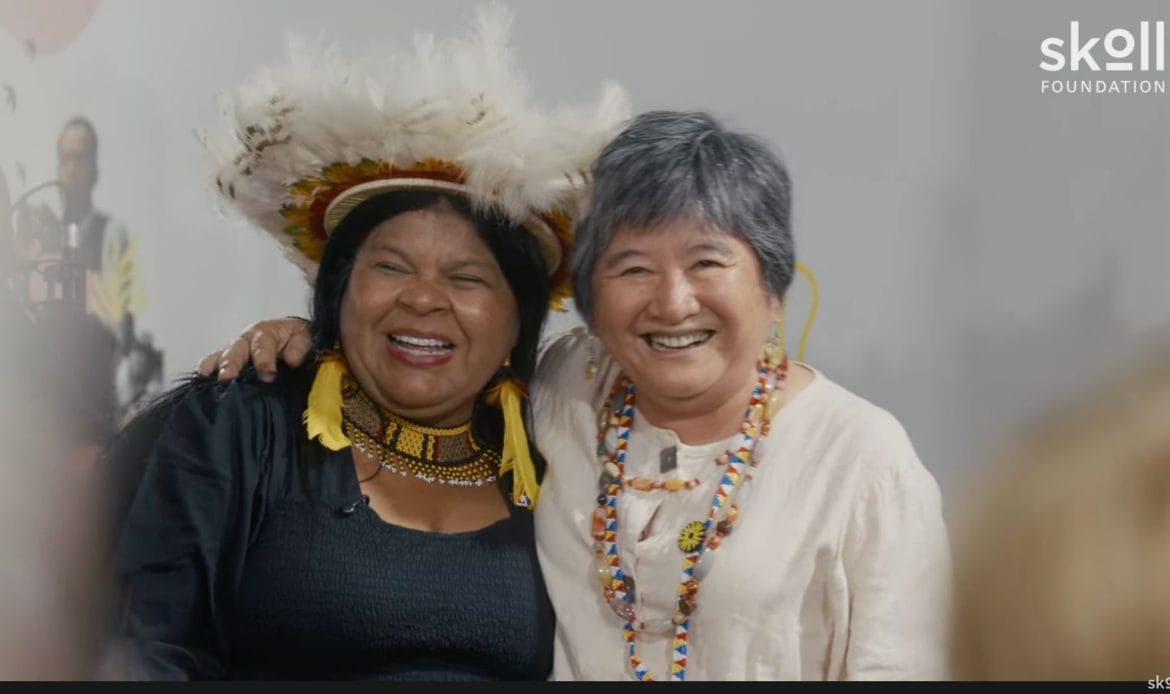
At COP30 in Belém, Brazil, over 3,000 Indigenous representatives gathered alongside world leaders to shape the global climate agenda. At the center was Joan Carling, a lifelong human rights activist from the Cordillera region of the Philippines, who joined forces with organizations like APIB, ANMIGA, and If Not Us, Then Who. Together, they pushed for Indigenous-led funds and policies that recognize the knowledge, autonomy, and central role Indigenous communities play in protecting the planet.
Indigenous peoples make up just 5% of the global population, yet they safeguard 80% of the world’s biodiversity. Despite this, their lands continue to be exploited, and their leaders face threats, violence, and exclusion from major climate negotiations. At COP30, Indigenous leaders demanded the right to self-determination, the demarcation of ancestral territories, and the direct resourcing of their communities — because climate justice cannot exist without Indigenous leadership.
A $1.8 billion pledge to secure land rights marked progress, but many left COP30 with a lingering question: will promises turn into action? As global negotiations continue, Indigenous leaders like Joan Carling are holding governments and funders accountable, and inspiring a new generation to stand, speak, and lead in the fight for our shared future.
Big Think created this video in partnership with the Skoll Foundation, whose vision is to live in a sustainable world of peace and prosperity for all. To solve the world’s most pressing problems, we need to trust those closest to the challenge. These are the solutions, people, and organizations making our world a better place for everyone.
