
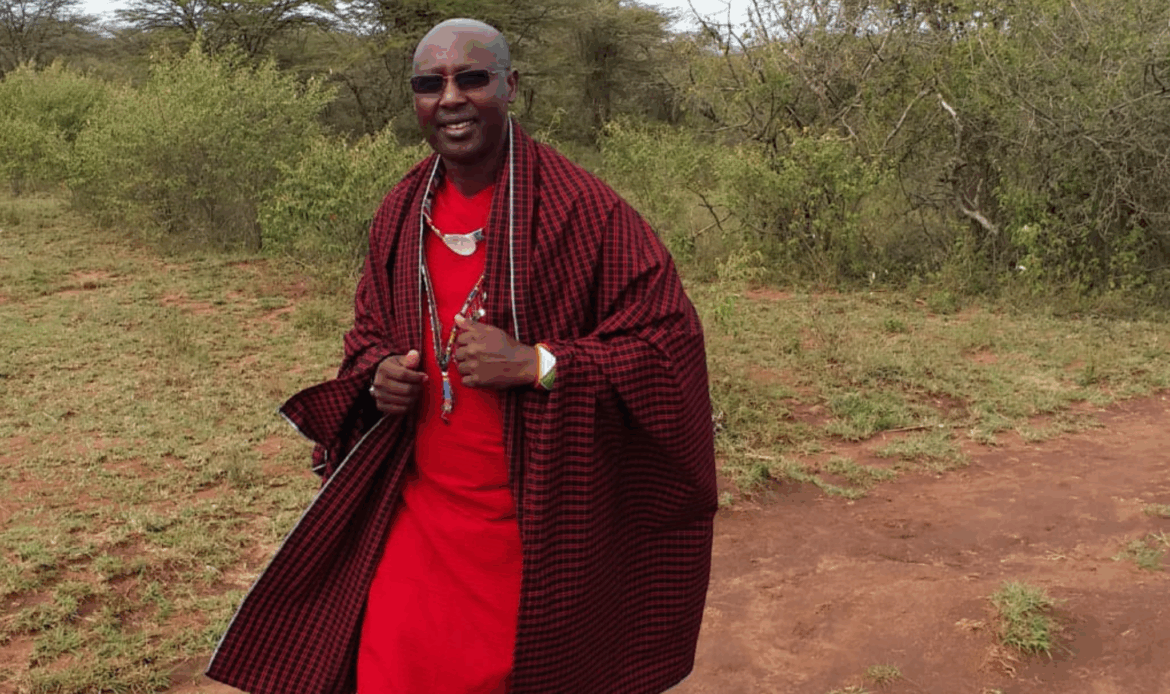
Fred Simiren Kariankei, an Indigenous Maasai community land rights defender from southern Kenya, never imagined that defending his people’s land would land him in prison. But in 2021, when he exposed what he believed was systematic betrayal by Kenya’s conservation elite—the Maasai Mara Wildlife Conservancies Association (MMWCA)—retaliation came swiftly.
Today, his story and legal battle reveal the structural violence embedded in the struggle between Indigenous land rights and institutional power.
A covert land deal without community knowledge
The conflict began in 2018, when land in Lemek Conservancy—previously leased to the military—was up for renewal. This time, the renewal morphed into a covert sale.
The Indigenous Maasai pastoralist community sought help from the National Land Commission (NLC) and the Directorate of Criminal Investigations (DCI). They believed these bodies would protect their rights. Instead, they later discovered that both institutions were complicit in the land transfer.
The deal was made in secret, inside the District Commissioner’s office, without the knowledge or consent of the Indigenous landowners.
MMWCA’s growing power over Maasai lands
Formed in 2013, MMWCA coordinates dozens of private conservancies across Narok County, turning Maasai land into exclusive wildlife zones. Under the banner of conservation—a national priority—MMWCA’s influence has grown.
While MMWCA publicly promotes “community partnership,” realities on the ground suggest that its model restricts Indigenous Peoples’ rights to decide how their land is used and governed.
Silence during rising human–wildlife conflict
By 2020, human–wildlife conflict surged in the Maasai Mara region. Communities sought help from MMWCA, but the association remained silent.
Amid that silence, Fred took initiative. Through his organization—the Mara Isinya Conservancy—he secured funds to protect 4,000 acres of community land. But MMWCA insisted on serving as the financial intermediary, a condition Fred reluctantly accepted.
During a visit to the conservancy, MMWCA presented dubious conditions for its support: a 25-year land lease imposed on 300 Indigenous households. They even brought a lawyer to pressure the community. Fred warned residents:
“A 25-year lease requires consent.”
Coercion and retaliation
MMWCA then made financial support conditional on signing the agreement:
“We don’t have time. We are not here to force people… if you want money, sign the agreement.”
Many community members—facing desperation and limited access to information—signed without understanding the consequences.
When Fred raised concerns with MMWCA and received no assurances, he reached out to donors. No one listened.
In retaliation, MMWCA froze the 4,000-acre conservation funds, effectively punishing Fred for speaking out.
Taking the fight online—and the cost of truth-telling
Desperate, Fred turned to social media. He accused MMWCA of corruption, coercion, and undermining land rights. He also denounced alleged nepotism and gender-based exploitation within its leadership.
One of his tweets read:
“Ticking time bomb! In Maasai Mara… conservancies have robbed over 15,000 Indigenous Maasai of their land using power of attorney for 25 years. 150,000 acres are no longer in landowners’ hands—unknowingly.”
The tweets gained attention—and consequences.
Fred was arrested, detained for two days at Mulot Police Station, then transferred to Narok Police Station. A magistrate granted a seven-day extension on grounds he was a “flight risk.” He was eventually released on a KES 30,000 bond and forced to report weekly to police.
Two simultaneous lawsuits
By late 2023, Fred faced two civil cases in the High Court of Kenya:
-
Maasai Mara Wildlife Conservancies Association vs. Fred Simiren Ole Kariankei
Case No. E002 of 2023 — MMWCA sought to validate the 25-year land leases.
-
Ole Sopia vs. Fred Simiren Ole Kariankei
Case No. E003 of 2023 — a defamation suit.
Both cases lingered for almost a year before being quietly dismissed.
Ongoing criminalization and personal impact
As the legal processes resume in May 2025, criminalization has severely impacted Fred’s livelihood. Blacklisted in conservation circles, he struggles to provide for his family.
The psychological toll is profound. The family lives with fear in their own home in Lemek, while the conservancy’s resources—intended to benefit the community—remain inaccessible due to structural retaliation.
The community is left without representation, as courts are used to punish and intimidate defenders.
A moral battle for dignity and justice
For Fred, this struggle is far bigger than a court case. He states:
“Defending land rights is in me. I have always believed in fighting for what is right. Stopping is not an option.”
His story reveals the uncomfortable truth:
Conservation is no longer just about wildlife—it is about power, land, and survival.
Conservation without consent is dispossession in disguise.
Support from the Legal Defense and Sanctuary Fund (LDSF)
IPRI’s Legal Defense and Sanctuary Fund (LDSF) has supported Fred Simiren, ensuring adequate legal defense and covering essential needs.
This support allows him to continue defending land rights and advocating for a model of conservation fundamentally different from that imposed by powerful elites—one that respects Indigenous Peoples’ rights.


