
The promise of a just energy transition has been hailed as a necessary response to the climate crisis. More dams, solar parks, wind farms, geothermal plants, and transition mineral mining are presented as the clean technologies that will power a sustainable future. Yet for Indigenous Peoples, these projects are often experienced not as solutions but as new frontlines of dispossession, violence, and criminalization.
Since 2021, IPRI has documented a total of 459 allegations of human rights violations, criminalization, violence, and impunity against Indigenous Peoples in Asia. Of these allegations, 24 cases are related to Just Energy Transition projects in Indigenous Peoples’ territories affecting an estimated total of 97 217 Indigenous individuals. Among the 24 cases, 18 are hydropower project related allegations in the countries, namely, the Philippines, India, and Nepal. The other 6 cases are related to solar power, geothermal power, wind power, and mining for transition minerals projects across the Philippines, Indonesia, Cambodia, and India.
Below are the details of 24 alleged cases of human rights violations.

The stories behind the numbers are harrowing. In the Philippines, the Tumandok people opposed the Jalaur River Multipurpose Project II, a mega-dam financed by South Korea’s Export-Import Bank and built by Daewoo Engineering & Construction. In December 2020, state forces stormed nine villages, killing nine (9) Indigenous leaders and arresting sixteen others. A few months later, another leader, Julie Catamin, was assassinated after publicly condemning the massacre.
Their stand against a dam that violated their right to free, prior, and informed consent (FPIC) was met not with dialogue, but with militarization and bloodshed. When the dam was inaugurated in 2024, it stood not only as an engineering feat but as a monument to impunity. The Tumandok, refusing to be erased, have since brought complaints together with their allies before South Korean agencies against the financiers and builders.
In India’s Arunachal Pradesh, Indigenous Adi and Idu Mishmi peoples have faced similar repression for opposing the Upper Siang Multipurpose Project. Leaders have been charged with crimes as grave as attempted murder and mob lynching—clear attempts to criminalize dissent and silence community protests. Recently, Bhanu Tatak, an Indigenous woman human rights defender opposing the 11,000-megawatt hydropower dam, was held and detained at the airport while in transit to a learning exchange in Ireland, and her travel was cancelled. While she was released, she is facing charges of attempted mob lynching, attempted murder, among others.
In Nepal, Indigenous Peoples resisting the proliferation of hydropower projects describe their struggle as one of survival, as dams destroy cultural practices, traditional occupations, and sacred sites.
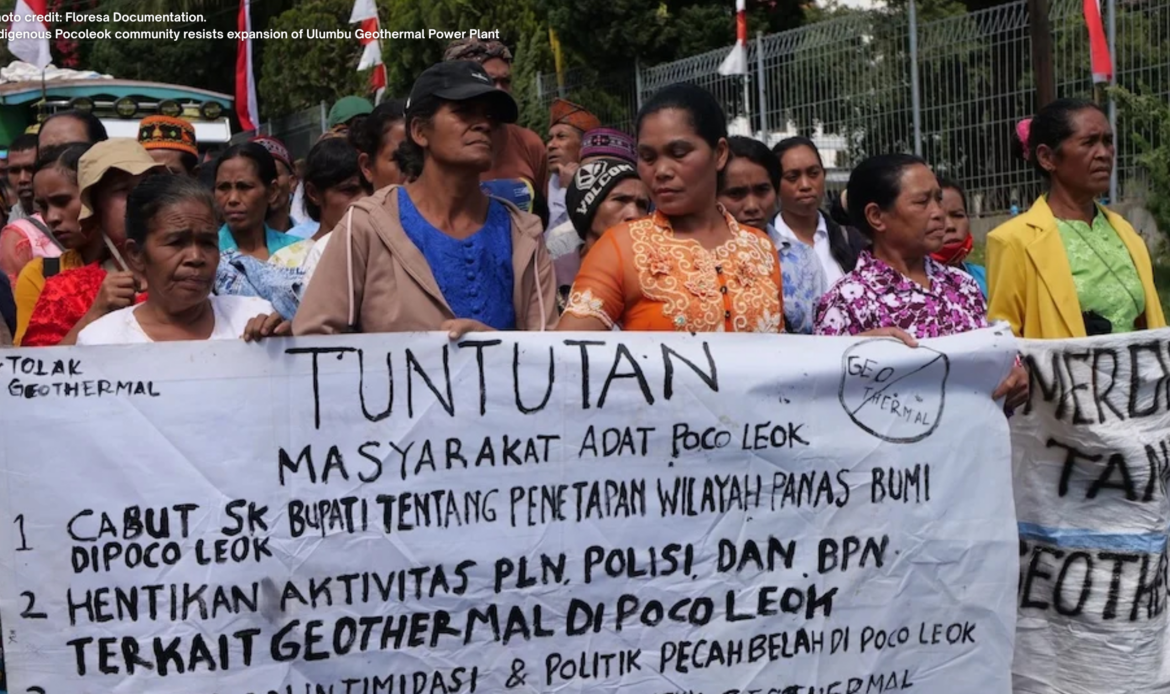
In Indonesia and Cambodia, geothermal and wind projects have proceeded without FPIC, with reports of arbitrary detention and physical violence. Even solar parks and transition mineral mining in the Philippines and India have been linked to forced displacement and intimidation.
Across these countries, the pattern is the same: killings, fabricated criminal charges, denial of FPIC, arbitrary detentions, forced displacements, harassment, and intimidation. Indigenous defenders—men, women, and even LGBTQIA+ leaders—are targeted precisely because they exercise their rights to protect their lands, territories, and resources. Some of the cases filed against the defenders are illegal possession of firearms and explosives, perjury, attempted homicide, attempted mob lynching, and attempted murder. Most of these are serious crimes warranting lifetime imprisonment if convicted.
Violating Rights, Ignoring Responsibilities
These abuses are not only moral outrages; they are also clear violations of international law. Both states and corporations have defined responsibilities.
Under the UN Guiding Principles on Business and Human Rights (UNGPs), states have a duty to protect human rights, while businesses have a responsibility to respect them, including the rights of Indigenous Peoples to their lands and to FPIC. This means governments cannot hide behind development rhetoric while militarizing Indigenous territories or criminalizing defenders. It also means corporations and investors cannot claim to be advancing clean energy while turning a blind eye to violence, displacement, and repression tied to their projects.
The UNGPs further affirm that companies must conduct human rights due diligence—not as a box-ticking exercise, but as a genuine commitment to prevent, mitigate, and remedy harm. Yet the cases documented by IPRI show how these obligations are routinely ignored. From South Korean banks financing violent dam projects in the Philippines, to state-owned corporations in India pushing mega-dams without consent, the failure to respect Indigenous rights is systemic.
The UN Secretary-General’s 2023 report on the Just Transition emphasized that the process must be people-centered and anchored in human rights. Importantly, the report recognized that Indigenous Peoples, as stewards of biodiversity and territories, must be partners in shaping the transition—not victims of its excesses. Yet in practice, Indigenous voices remain excluded, their rights sidelined, and their defenders targeted.
What is happening across Asia is not a just transition. It is an unjust transition that sacrifices Indigenous Peoples for the sake of megawatts and minerals. It is a transition that secures profits for corporations and governments while undermining the survival of communities that have safeguarded rivers, forests, and biodiversity for generations.
The denial of FPIC stands at the center of these violations. In at least fifteen of the documented cases, projects were imposed without the genuine consent of affected communities. FPIC is not a bureaucratic hurdle—it is a fundamental right enshrined in the UN Declaration on the Rights of Indigenous Peoples (UNDRIP). It ensures that development is not imposed by force, but decided through dialogue, respect, and self-determination. When FPIC is denied, violations follow: killings, displacements, cultural destruction, and loss of livelihoods.
The just transition cannot be reduced to a technological shift from fossil fuels to renewables. It must be a power shift—from top-down imposition to bottom-up participation. This means:
- States must end militarization and repression, protect defenders, and guarantee FPIC in law and practice, and provide effective mechanisms for the meaningful participation of Indigenous Peoples ( including women, youth, and persons with disabilities) in renewable energy development plans and support their initiatives for real solutions
- Corporations and investors must respect Indigenous Peoples’ rights, conduct rigorous human rights due diligence, including the proper conduct of FPIC, and provide appropriate remedies where harm occurs.
- Climate finance institutions must redirect resources to Indigenous-led initiatives that strengthen self-determined development, community resilience, and biodiversity protection.
The urgency of the climate crisis cannot be used as an excuse to trample on Indigenous Peoples. To do so is to betray the very meaning of justice. The evidence is mounting: twenty-four documented cases, nearly 100 000 lives affected, and countless defenders silenced, displaced, or killed.
But Indigenous Peoples are not passive victims. We continue to resist, to defend our lands, and advance local solutions for a just transition rooted in rights, justice, and self-determination. We are ready to be partners in building truly sustainable futures. What is needed is the political will of states and corporate accountability to listen, respect, and act accordingly.
Only when our rights are upheld—not violated, when social equity, shared prosperity, and sustainability are the cornerstone of the energy transition, can we truly call this transition just.


