
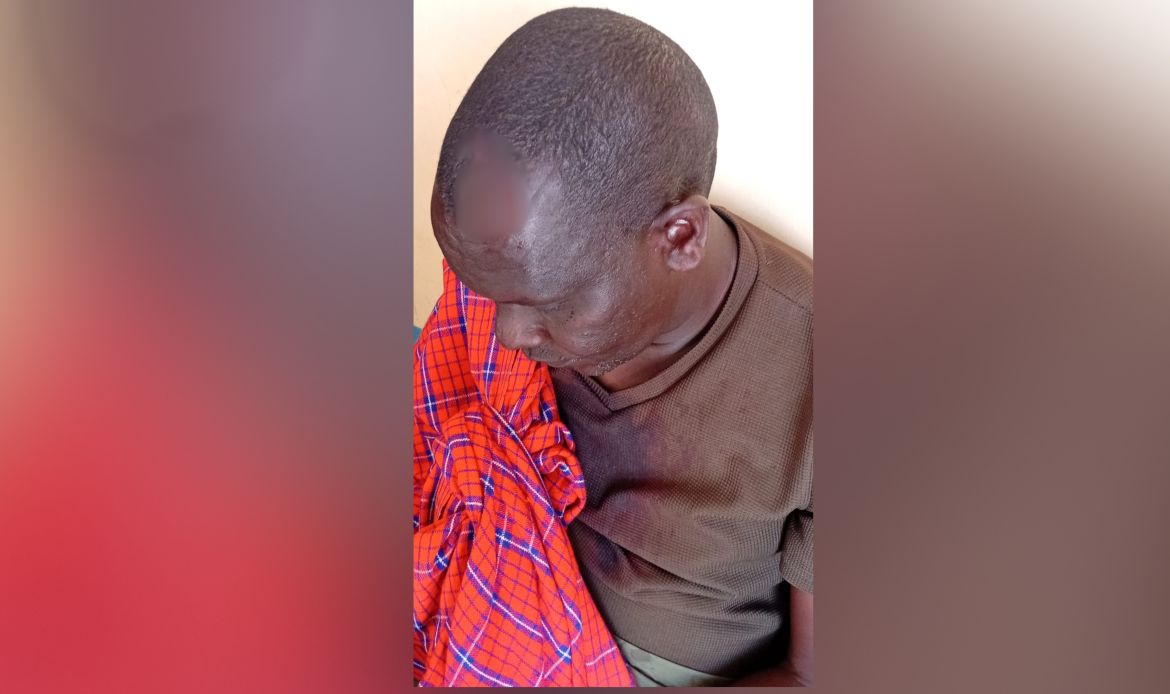
Just one day after we condemned the violent assault against William Sipai, an elected Maasai community leader and Indigenous land rights defender, we have received confirmation that he has now been arbitrarily arrested and detained.
On 30 July 2026, Kenyan police arrested Mr. Sipai and transferred him to the Directorate of Criminal Investigations (DCI) in Naivasha. One day after he was violently attacked while peacefully opposing the installation of boundary markers on the disputed Maasai ancestral lands in Kedong.
William Sipai has spent years defending the ancestral lands of the Keekonyokie Maasai in Kedong through peaceful advocacy and legal action. He is one of the complainants in Communication 763/21, in which the African Commission on Human and Peoples’ Rights recently found that Kenya violated multiple rights of the Maasai and ordered the State to provide remedies.
The timing of Mr. Sipai’s assault and detention—immediately following the publication of the Commission’s decision—raises serious concerns that these acts constitute reprisals against an Indigenous human rights defender for engaging with the African human rights system and for continuing to advocate for the implementation of the Commission’s ruling.
An urgent appeal has now been submitted to the African Commission’s on Human and Peoples’ Rights to urge the Government of Kenya to:
- Issue an urgent communication to the Government of Kenya seeking clarification regarding the assault, arrest and detention of Mr. William Sipai and the legal basis for the actions taken against him.
- Call upon the Government of Kenya to immediately ensure Mr. Sipai’s physical integrity, due process rights, and protection from any further intimidation, harassment or reprisals.
- Request the Government to conduct a prompt, impartial and independent investigation into the reported assault against Mr. Sipai and ensure accountability for those responsible.
- Urge the Government of Kenya to refrain from using criminal or administrative measures to silence Indigenous Peoples and human rights defenders peacefully defending their ancestral lands.
- Remind the Government of its obligation to protect all Indigenous human rights defenders from reprisals for engaging with regional and international human rights mechanisms, including the African Commission on Human and Peoples’ Rights.
- Encourage the Government to engage in genuine dialogue with the affected Maasai community regarding the boundary demarcation process and to ensure that any decisions affecting community land are undertaken in accordance with applicable Kenyan law and international human rights standards, including the principles of free, prior and informed consent.
- Request the Government to take concrete measures to implement the African Commission’s decision in Communication 763/21 and to ensure that those who sought justice before the Commission are not subjected to retaliation.
This case raises concerns about Kenya’s obligation to respect the rights of the Maasai people, implement a landmark regional human rights decision, and ensure that Indigenous Peoples can defend their lands without fear of violence, detention, or reprisals.
Defending Indigenous lands is not a crime.
