
Asia is experiencing a rapid surge in renewable energy development, fueled by an unprecedented flow of investments into the region. However, if it repeats the old model of landgrabs and repression, it will only deepen injustice instead of solving it. Two renewable energy initiatives– one in Assam, India, and another in Flores, Indonesia—show what happens when “ green projects” are imposed on Indigenous Peoples.
In Assam, the government of India and the Asian Development Bank (ADB) sought to build one of the largest solar farms in the region, backed by a $434 million loan. On paper, it was a model of progress. On the ground, it threatened to displace 24 villages and seize 2,400 hectares of land—including forests, farms, and customary land of the Karbi, Naga, Kachari Indigenous communities without their consent. When these communities spoke out, they faced intimidation. Yet they organized, mobilizing thousands of families through the Karbi Anglong Solar Power Project Affected People’s Rights Committee. Their collective actions forced the Indian Ministry of Finance to request the withdrawal of financing, and in May 2025 the ADB cancelled the loan. What looked like a grand “green” project collapsed because it ignored rights.
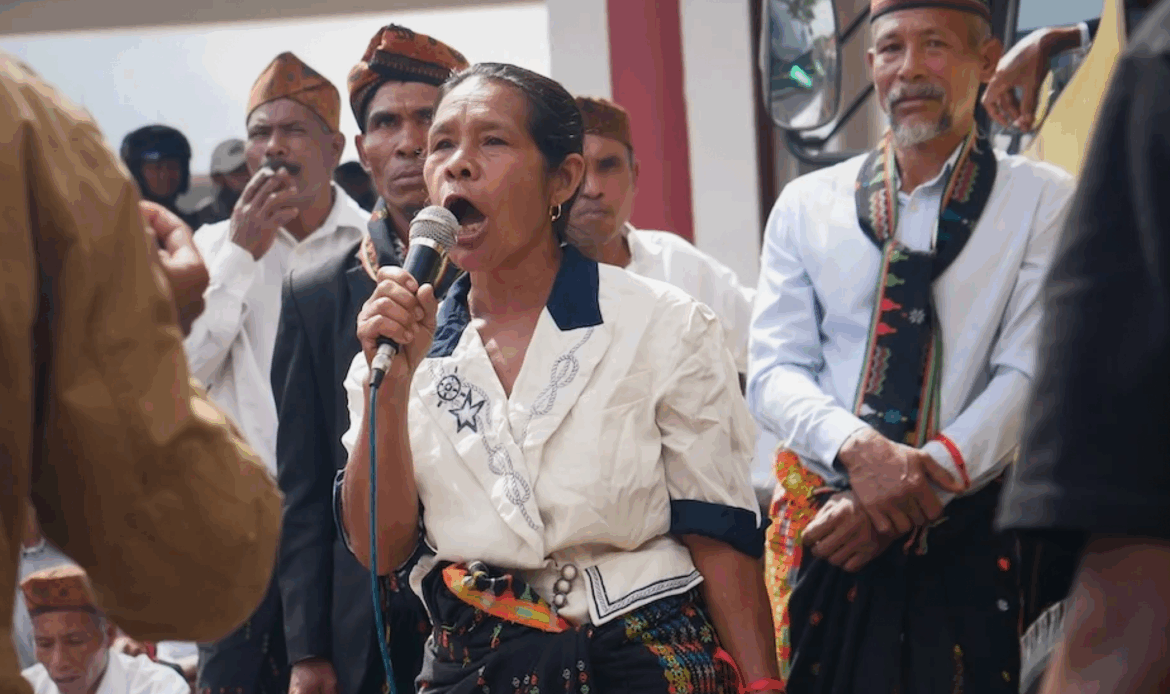
On Flores Island in Indonesia, a German-backed geothermal expansion is now facing similar strong opposition. The Ulumbu project, supported by KfW, Germany’s development bank, and Indonesia’s state utility PLN, aims to quadruple power generation from 10 to 40 megawatts. However, Indigenous communities in Poco Leok never gave their consent. Instead, they have endured intimidation, security crackdowns, and violence during protests. Civil society organizations and church leaders have rallied behind them, warning of water scarcity, deforestation, and ecological disaster. In April 2025, amid mounting pressure, the Governor of East Nusa Tenggara announced a review of geothermal development across Flores. A formal complaint has also been filed with KfW, forcing the bank to suspend their funding and to commission an independent review of the project’s financing.
These two cases—offer critical lessons for governments and funders. First, renewable energy is not inherently just. Without the Free, Prior and Informed Consent (FPIC) of Indigenous Peoples, it becomes another discriminatory act, cloaked in green promises but carrying the same old harms and destined to conflicts. Second, Indigenous resistance must be taken seriously as a legitimate defense of rights and survival, not dismissed as an obstacle. Third, Indigenous communities are not against clean energy—they are against being excluded and violated. Many Indigenous communities propose their own alternatives: decentralized solar, mini-hydro, microgrids, and other systems that meet energy needs without sacrificing land, water, biodiversity, livelihoods and culture.
Assam and Flores are warnings to governments and investors. If renewable energy projects affecting Indigenous Peoples are to endure, they must be co-designed with Indigenous Peoples from the outset. FPIC must be treated as a cornerstone of engagement with Indigenous Peoples in good faith. The climate crisis demands urgency, but urgency cannot justify coercion and imposition. Safeguards must go beyond lip service and implemented properly. Likewise Investments must shift toward Indigenous initiatives that already exist and already working.
The climate crisis demands bold action, but real climate justice means building a future where solutions are not forced on communities, but shaped with them.
