
From Commitments to Action: Indigenous Peoples Call for Implementation at the 10th Regional Forum on Business and Human Rights
Despite funding cuts and shrinking civic space, Indigenous leaders from across Latin America and the Caribbean arrived in Panama with a clear message: Indigenous rights cannot remain policy commitments on paper. The next decade must focus on implementation, accountability, and respect for Indigenous Peoples’ self-determination.
Indigenous voices remain essential despite funding cuts
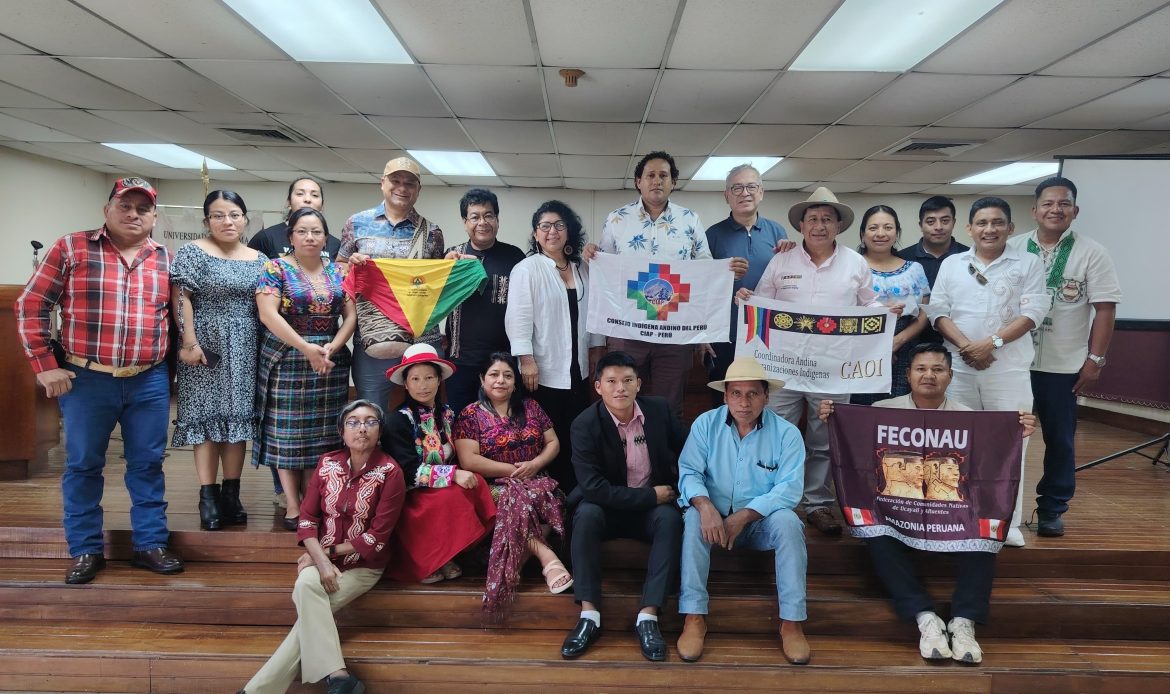
As the 10th Regional Forum on Business and Human Rights convened in Panama City, Indigenous representatives from across Latin America and the Caribbean gathered first in an Indigenous Peoples Caucus to identify common concerns and develop shared recommendations.
The meeting took place against a difficult backdrop. Budget reductions across the UN system and international cooperation agencies significantly limited Indigenous Peoples’ participation. Nevertheless, Indigenous organizations mobilized resources and often self-financed their attendance to ensure that their communities remained represented in regional decision-making spaces.
A growing concern: extractive activities and the protection of Indigenous Peoples’ territories
Participants repeatedly highlighted the accelerating expansion of illegal mining across the region and its impacts on Indigenous Peoples’ territories, livelihoods, governance systems, and community safety.
Discussions also underscored the continued failure of many States to uphold their obligations to protect Indigenous Peoples’ collective rights, particularly where economic interests are prioritized over human rights commitments.
As Javier Palummo, Special Rapporteur on Economic, Social, Cultural and Environmental Rights of the Inter-American Commission on Human Rights, noted: “There is no shortage of diagnoses; what is urgently needed is action, implementation of recommendations, and systematic follow-up and accompaniment.”
FPIC is a right, not a procedural requirement
One of the central discussions of the Forum focused on the report of the UN Working Group on Business and Human Rights concerning Free, Prior, and Informed Consent (FPIC).
Cecilio Solís, Nahua Indigenous leader from Mexico and President of CIELO, reminded participants that FPIC cannot be reduced to an administrative process: “FPIC is a right, not a box-ticking exercise. It requires respect for Indigenous Peoples’ own governance systems, community timelines, and their genuine right to say yes, no, or to rethink proposals that affect their lands, territories, and futures.”
Participants further emphasized that meaningful dialogue requires mutual understanding. Just as Indigenous Peoples have often been expected to navigate legal and business frameworks, States and companies must also invest in understanding Indigenous governance institutions, decision-making processes, and knowledge systems.
Moving from policy to implementation
Across discussions, one message emerged consistently: the challenge is no longer the absence of standards.
Fifteen years after the adoption of the UN Guiding Principles on Business and Human Rights, participants stressed the urgent need to transform due diligence, responsible business conduct, remedy mechanisms, and Indigenous participation into measurable and enforceable practices.
The Forum concluded with a strong call for governments, businesses, and international institutions to ensure that Indigenous Peoples are recognized not merely as stakeholders, but as rights holders whose participation is indispensable to achieving sustainable and equitable development.
Looking ahead
The coming decade will require more than commitments. It will require effective implementation, accountability, access to remedy, and the full and effective participation of Indigenous Peoples in decisions affecting their lands, territories, and futures. As Indigenous leaders made clear throughout the Forum, economic development cannot continue to go on separate paths from human rights and, especially, from Indigenous Peoples’ rights. ensive as those carried out on the Children of Llullaillaco. However, archaeological investigations did confirm that the find was part of a capacocha ceremony held during the Inca period.

