
Indigenous Peoples and the Just Transition: Lessons from the South–South Learning Exchange in Nepal
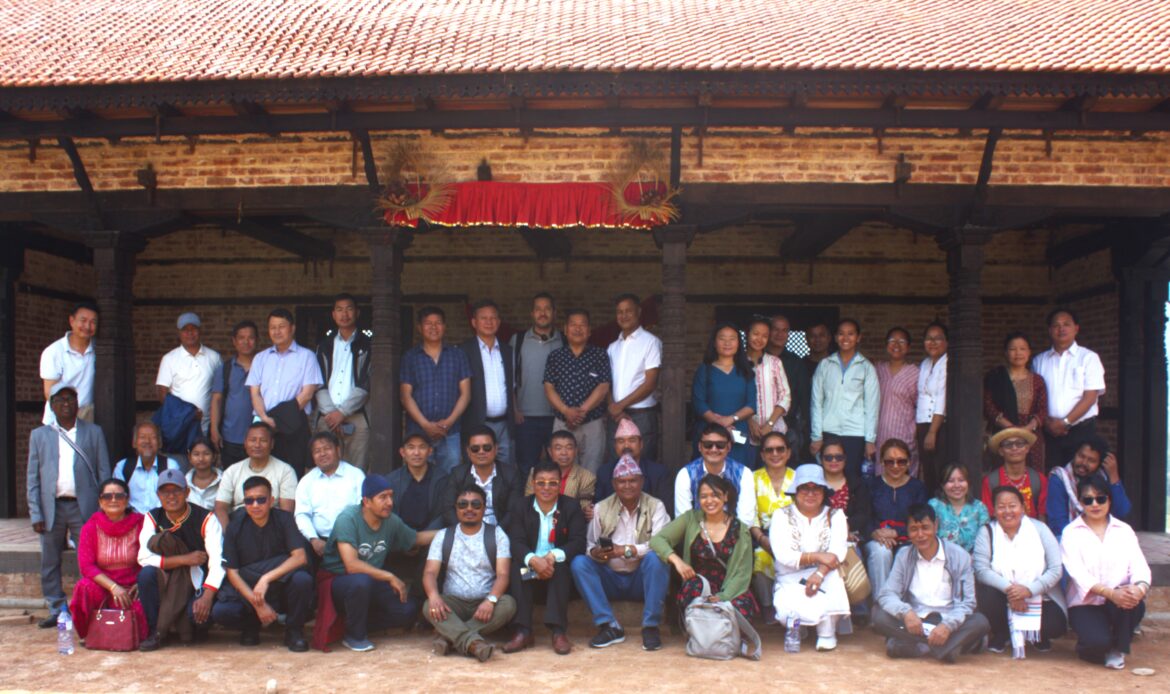
The Lawyers’ Association for Human Rights of Nepal’s Indigenous Peoples (LAHURNIP) along with Indigenous Peoples Rights International (IPRI) and the Business & Human Rights Resource Centre under the BRAVE Project, hosted a South–South Learning Exchange on Indigenous Peoples’ Rights and the Just Transition in Kathmandu, Nepal from 20–22 April 2026.
This event brought together Indigenous leaders from the local communities, women leaders, legal representatives, and international Indigenous experts from Nepal, India, Panama, Costa Rica, Bangladesh and Thailand in order to exchange experiences, build unity and exchange strategies for the promotion of the rights of Indigenous Peoples in the context of the Just Transition. The exchange program addressed issues of Indigenous self-determination, autonomy, customary governance systems, climate justice, business and human rights and Free, Prior and Informed Consent (FPIC). Organizers highlighted the program’s objectives to intensify collective advocacy, enhance cross-country learning, and link local issues with global human rights mechanisms.
The sessions were facilitated by Indigenous rights advocates, legal experts, researchers, and international practitioners. Their presentations and discussions highlighted Indigenous Peoples’ struggles for self-determination, protection of ancestral territories, climate justice, corporate accountability, and meaningful implementation of FPIC.
Indigenous Knowledge, Self Governance and Autonomy
During the opening sessions, speakers highlighted importance of the Indigenous knowledge systems and self-governance as a way of combating ecological destruction, democratic deterioration, and cultural erosion.
The role of Indigenous knowledge was discussed as an integrated system, not something that can be in addition to, but rather part of, land, spirituality, reciprocity, culture, and collective responsibility. The participants shared experiences on the continued efforts of Indigenous communities in Asia and Latin America to consolidate their rights and livelihoods amidst rising pressures from state-led development and extractive industries.
Gam Awungshi Shimray said: “Strong Indigenous systems require deep roots, strong values, trust and unity within communities.” The gaps in implementation of international human rights conventions like ILO Convention 169 and the United Nations Declaration on the Rights of Indigenous Peoples (UNDRIP) and how this might play out in national legal systems were also discussed. Speakers particularly highlighted the importance of recognizing customary governance institutions and Indigenous autonomy in Nepal and across the region.
Bhim Rai from LAHURNIP stressed the importance of legal recognition and implementation: “Self-determination and self-governance are very important for protecting Indigenous Peoples’ land and rights.” Examples of Indigenous-led governance and resistance from Nepal, India, and Panama illustrated how communities are using legal advocacy, local legislation, documentation, and collective mobilization to defend their rights. Participants discussed cases involving the Baram, Tharu, Limbu, Newar, and Magar Indigenous communities in Nepal, alongside experiences shared from Northeast India and the autonomous Guna Yala territory in Panama.
Climate Justice, FPIC and Business Accountability
One of the main areas of discussion was the increasing effects of renewable energy, hydroelectric energy, mining and infrastructure developments on Indigenous lands.
The speakers from Nepal and India emphasized that while these large-scale energy transition projects were being promoted as “green development” they continue to result in dispossession of land, displacement, loss of biodiversity, and infringement of the rights of Indigenous Peoples. The lack of effective implementation of FPIC processes in Nepal and the wider region repeatedly came up as a concern from participants. Community representatives shared experiences of projects moving ahead even when there was local opposition, lack of adequate consultation and access to accurate information. There was a strong emphasis on the need for FPIC to be more than just a consultation, and for communities to have a meaningful say in whether a project on their land and resources will be accepted.
Alancay from the Business & Human Rights Centre (BHRC) highlighted the need to pursue evidence-based advocacy, documentation, media engagement and strategic use of global complaint systems to engage corporations and investors on Indigenous rights abuses. Another aspect of the exchange was the increasing visibility of Indigenous women in advocacy and self-governance. The multiple forms of discrimination faced by Indigenous women have been discussed, along with the opportunities to promote Indigenous women’s participation, leadership and protection through international mechanisms like CEDAW General Recommendation 39.
Community Visit at Khokana
The last day of the exchange was dedicated to a field visit to sacred Newa Indigenous cultural sites at Khokana and Sikali Chaur in the Kathmandu Valley which are under threat from the Kathmandu–Tarai Fast Track project. Community leaders shared their long-standing struggle against land acquisition, cultural destruction, and lack of FPIC under the project. Participants were taught about Indigenous community and legal actions to protect their lands and cultural heritage.
The field visit gave the participants a first hand experience of the risks of large-scale infrastructure projects to Indigenous identity, cultural continuity and traditional livelihoods. Oral histories, collective identity and the protection of sacred spaces for future generations were key themes raised by community representatives, not only as issues of land ownership.
Conclusion
The learning exchange ended with strong call for Indigenous People’s organizations, legal rights groups, grassroots organizations and international partners to work more together, continue solidarity, collective advocacy, and stronger collaboration. Participants highlighted the importance of linking local issues with regional and global human rights platforms; enhancing documentation and legal advocacy; and meaningful engagement of Indigenous Peoples in policy and decision-making processes.
In closing remarks, Dinesh Ghale, Chair of LAHURNIP, emphasized the importance of unity and collective responsibility: “If Indigenous Peoples want to protect their identity and existence, they must strongly claim and defend their land, culture, and spiritual territories.” The program successfully created a space for cross-country learning, reflection, and strategy building among Indigenous communities facing common challenges related to land rights, self-determination, climate justice, and corporate accountability. Similar South–South exchange programs are underway in other countries, and organizers highlighted efforts to continue strengthening international solidarity and collective action for Indigenous Peoples’ rights.
