
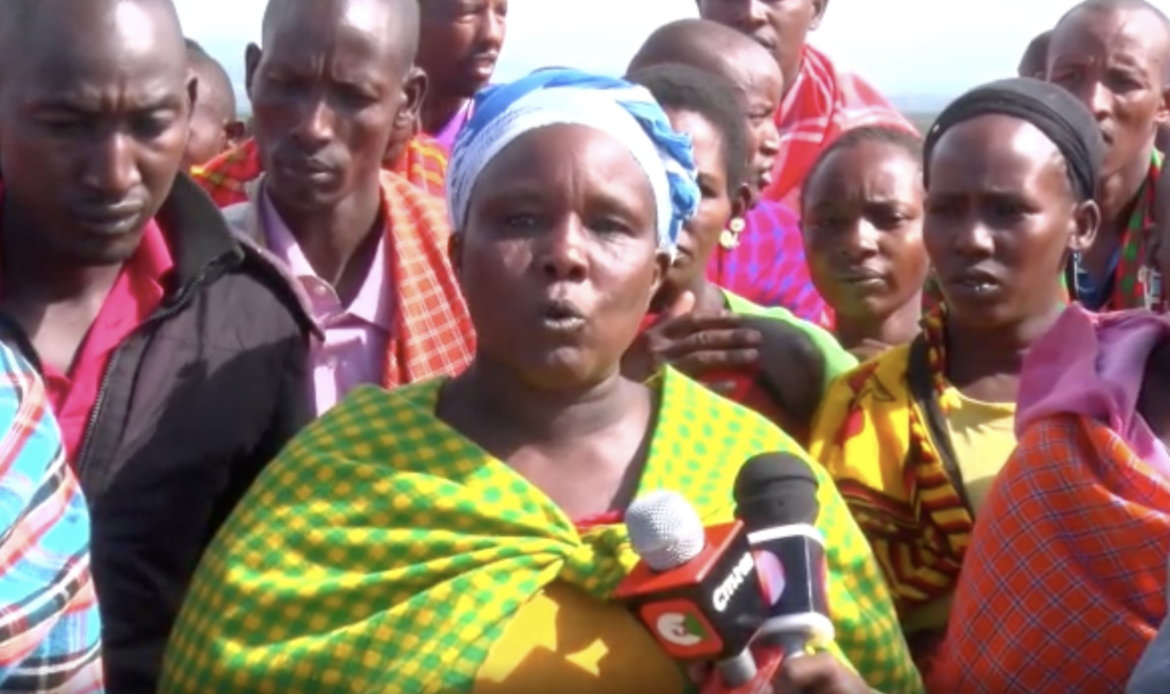
Kenya: William Sipai’s Fight for Maasai Land Rights in Kedong
On 14 September 2025, government surveyors escorted by a police battalion arrived in Kedong to install boundary markers on land claimed by the Maasai. Community members moved quickly to stop them. Among those at the forefront was Indigenous leader William Sipai, whose years-long defense of Maasai land rights would soon place him at the center of renewed threats and intimidation.
The confrontation was the latest chapter in a struggle that has shaped Maasai lives for generations. For Sipai and thousands of Maasai families, the dispute over Kedong is not simply about land ownership. It is about the right to return to ancestral territory, to preserve a pastoralist way of life, and to challenge a history of dispossession dating back to the colonial era.
Located between Naivasha and Laikipia, Kedong Ranch covers approximately 96,000 acres of land historically occupied by Maasai communities long before British colonization. For generations, the territory supported pastoralist livelihoods, cultural traditions, and community life. Yet despite historical agreements recognizing Maasai occupation of the area, the community has repeatedly found itself excluded from the very land it considers ancestral territory.
A legacy of dispossession
The roots of the conflict stretch back to the colonial period.
In the late nineteenth century, British colonial expansion into Maasai territory brought violence, displacement, and profound changes to Indigenous land governance. Following armed confrontations, colonial authorities entered into agreements with Maasai leaders in 1904 and 1911 that fundamentally altered control over vast areas of land.
Although these agreements were presented as guarantees of Maasai territorial rights, they also facilitated the removal of Maasai communities from fertile lands in Laikipia and Naivasha. Large areas were subsequently opened to settler occupation, laying the foundations for patterns of land ownership that continue to affect Maasai communities today.
For many Maasai, independence in 1963 did not bring an end to these injustices. Community leaders argue that colonial land structures were largely preserved, allowing historical inequalities to continue under new political and economic arrangements.
One example is Kedong Ranch.
The lease covering the area remained under private control for decades. When it expired in 2004, Maasai families gradually began returning to portions of the land they regarded as rightfully theirs. But what followed was a new cycle of disputes and legal battles.
Returning home, facing resistance
Community members report facing repeated efforts to prevent their return to Kedong.
According to Maasai leaders, families encountered legal challenges, police harassment, demolitions, and restrictions on access to traditional grazing areas. Fences, trenches, and other barriers increasingly limited movement across lands that had historically sustained Maasai pastoralist livelihoods. This struggle soon moved into the courts.
Community representatives pursued legal action to defend their claims to the land. However, the legal process itself became a source of frustration. Following an unfavorable High Court ruling in 2015, an appeal was initiated but later withdrawn under circumstances that many community members continue to question.
Meanwhile, the impacts on everyday life continued to grow. For a pastoralist people whose survival depends on mobility and access to grazing lands, restrictions on movement affect far more than just the economy. They disrupt traditional practices, weaken community resilience, and threaten cultural continuity.
Community leaders estimate that tens of thousands of Maasai living in the area have been affected by uncertainty, displacement, and recurring tensions linked to the dispute.
A leader under pressure
Since being elected as a community leader in 2018, William Sipai has become one of the most visible advocates for Maasai land rights in Kedong. His work has included organizing community efforts, supporting legal actions, engaging government institutions, and bringing international attention to the dispute.
That visibility has also come with significant risks.
On 14 September 2025, government surveyors accompanied by a police battalion entered the area to install boundary markers on the disputed land. Community members mobilized to oppose the operation, arguing that the territory remained subject to unresolved claims by the Maasai.
The tensions were not new. In 2021, William Sipai and other community members were arrested in connection with similar actions to defend the land and publicly assert that ownership of the territory remained under dispute.
As the conflict intensified, Sipai continued speaking out on behalf of the community. In December 2025, he began receiving threats on his personal phone, raising concerns about his safety and ability to continue his leadership role.
These incidents reflect a broader pattern experienced by Indigenous land defenders around the world, where advocacy for ancestral territories can expose community leaders to intimidation, harassment, criminalization, and security risks.
Supporting Indigenous defenders
In response to the threats against him, the Legal Defense and Sanctuary Fund (LDSF) provided support for William Sipai’s temporary relocation and protection needs.
The support helped improve his security while enabling him to continue his leadership and advocacy on behalf of Maasai communities affected by the Kedong dispute. By addressing immediate protection concerns, the Fund helped ensure that threats and intimidation would not silence a key Indigenous leader defending community land rights.
For Indigenous defenders facing increasing pressure because of their work, timely protection measures can be critical to maintaining both personal safety and the continuity of community-led advocacy.


