
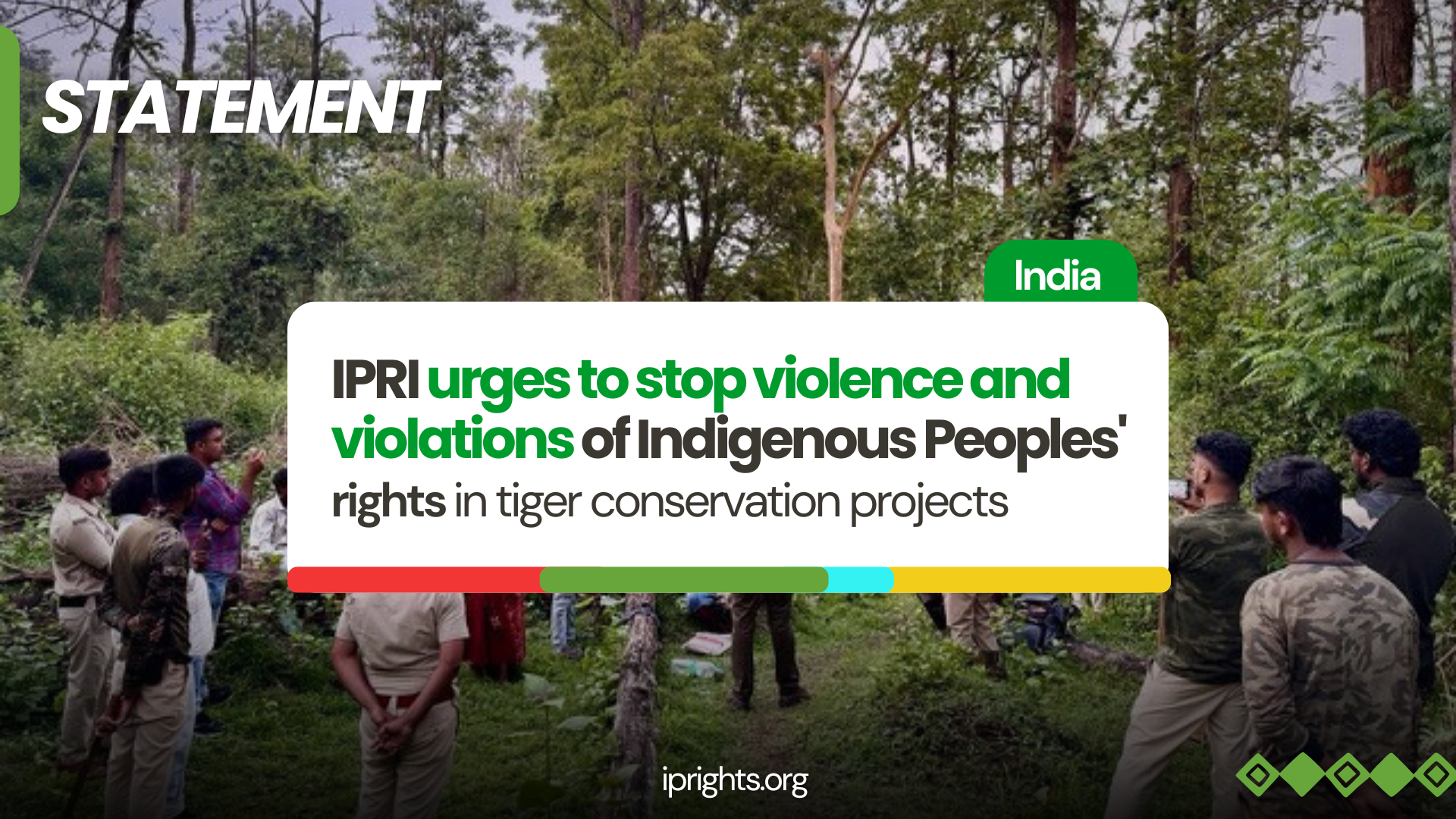
 May 9, 2025 Indigenous Peoples Rights International (IPRI) is deeply concerned about the use of force and rights violations against the Jenu Kuruba, Betta Kuruba, Yerava, and Paniya tribal communities in the context of their return to their ancestral lands. The eviction of these people has taken place in the context of the expansion of tiger reserves in southern India. IPRI is an international indigenous-led organization dedicated to addressing the criminalization and rights violations of Indigenous Peoples around the world. According to information gathered by our partners, on May 4, 2025, members of the Jenu Kuruba, Betta Kuruba, Yerava, and Paniya tribal communities publicly declared their intention to return and reclaim their traditional forest villages in Nagarahole National Park after being evicted without their consent or physically and culturally appropriate relocation. On the afternoon of May 5, around 52 Jenu Kuruba families began to claim their rights and started constructing sacred spaces for their deities, a common practice in their community when a village is re-established. The State’s response was not to dialogue and seek solutions, but to send 120 troops from the Karnataka Forest Department and the Karnataka State Tiger Protection Force to evict the families. This unjust response is unwarranted as it will only worsen the further marginalization and discrimination of the Jenu Kuruba tribe. The fortress conservation system of removing humans from conservation areas without respecting the rights of indigenous people who have lived in harmony with the environment and biodiversity has been going on for decades in India, affecting the lives of thousands of tribal people. Nagarahole was first declared a wildlife sanctuary in 1955. By 2012, the total area of the reserve reached the current 847,981 km2. Following the introduction of the Wildlife Protection Act of 1972, more than 3400 tribal families were relocated, but most of them have not been adequately rehabilitated. In the face of this, since 2010, several Jenu Kuruba families have made multiple attempts to return to Nagarahole, always meeting a violent state response. On June 19, 2024, the National Tiger Conservation Authority (NTCA) issued a directive identifying 64801 families from 591 villages for relocation from areas designated as core/critical tiger habitat. Tribal members of Nagarahole National Park have expressed deep concern over this directive and have demanded that the government withdraw it. They have also questioned the legality of declaring Nagarahole a tiger reserve without the consent of the local Gram Sabhas (village councils), claiming that this violates multiple laws, including the Panchayat (Extension to Scheduled Areas) Act of 1996 and the Forest Rights Act of 2006. We are deeply concerned that efforts by Indigenous Peoples to remedy evictions and assert their rights have been met with criminalization and violence with impunity. For example, the authorities have denied or delayed recognition of their forest rights, making it easier for them to be considered illegal and denied their rights. In addition, in the face of their protests of injustice, they have found themselves being falsely charged with assaulting law enforcement officers or smuggling contraband. In the past, several tribal members have also been attacked with firearms by forest guards. Although the Indigenous Peoples and their defenders have tried to take cases of aggression to the courts and National Human Rights Institutions (NHRIs), they have remained unpunished because the authorities refuse to investigate. Even the investigation into the 2023 murder of Maasti (30 years old), a Kenu Kuruba tribal, was shelved. IPRI strongly condemns both the denial of Indigenous Peoples’ rights and the misuse of criminal law and state violence to punish them. These aspects make up a classic pattern of criminalization against indigenous communities and leaders who defend their territories, their rights, and their ways of life, which is unbecoming of a State that claims to be democratic and respectful of the rule of law. IPRI calls on the State of India to: Respect and ensure the protection of the rights of tribal peoples over their ancestral lands Immediately initiate an impartial investigation into aggressions against tribal members at the hands of forest guards and hold those responsible to account and undertake culturally appropriate measures of reparation and non-repetition. To dismiss false charges brought against leaders and members of indigenous communities. To stop the violent response against the returning tribal communities Jenu Kuruba, Betta Kuruba, Yerava, and Paniya, and to establish a meaningful dialogue for the respect of their rights and wellbeing. To review laws and policies relating to conservation to ensure alignment with the respect, recognition, and protection of the rights of Indigenous Peoples. Scientific studies have shown that biodiversity areas managed by Indigenous Peoples are better conserved and protected than those managed by the government and other actors. We affirm that respecting and protecting the rights of Indigenous Peoples at the center of biodiversity protection will guarantee peaceful coexistence and effective conservation models. Download the statement here


