
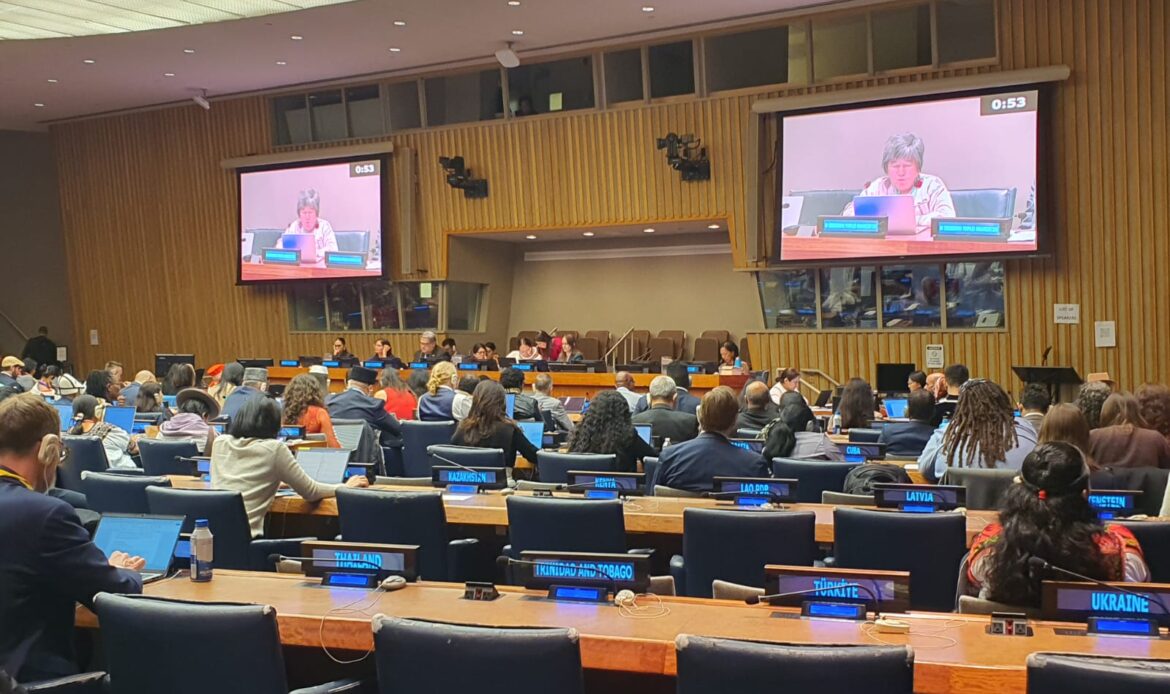
UNPFII25
Intervention on Agenda Item 5 E: Indigenous Peoples and Climate Change
Joan Carling, Indigenous Peoples Rights International
The energy transition is a central response to climate change, but for many Indigenous Peoples it risks repeating the sameextractive model that has driven the crisis. With around 54% of energy transition minerals located on or near Indigenous territories, climate solutions are increasingly imposed on lands already under pressure. Energy projects are being implemented without respecting our land and resource rights and Free, Prior and Informed Consent (FPIC), undermining our self-determination and resulting to evictions, destruction of our livelihoods and food systems and weakening our ecosystems which have long protected—systems that are vital for climate resilience.
This is most visible in the rapid expansion of mining for critical minerals such as lithium, nickel, and cobalt in theterritories of Indigenous Peoples across the globe, with demand projected to rise by up to 500% by 2050. 23% of energy transition mineral projects near Indigenous lands are located close to violent conflict zones, while 62% are in high water-risk areas and 71% in food-insecure regions, highlighting the vulnerabilities of Indigenous Peoples to environmental impacts, conflicts, and increasing inequality.
The energy transition is a central response to climate change, but for many Indigenous Peoples it risks repeating thesame extractive model that has driven the crisis. With around 54% of energy transition minerals located on or near Indigenous territories, climate solutions are increasingly imposed on lands already under pressure. Energy projectsare being implemented without respecting our land and resource rights and Free, Prior and Informed Consent (FPIC), undermining our self-determination and resulting to evictions, destruction of our livelihoods and food systems and weakening our ecosystems which have long protected—systems that are vital for climate resilience.
The consequences is clearly not only green colonialism for control of Indigenous Peoples land and resources but also widespread deforestation, water depletion and pollution. Likewise, numerous renewable energy projects including hundreds of hydro-dams, geothermal plants, windmill and solar farms are becoming a major source of land grabs, evictions and food insecurity. When Indigenous peoples take action to defend our rights, we are being attacked and criminalized, and violence against Indigenous Women are on the rise. In Asia alone, we – the Indigenous Peoples Rights International has documented 24 cases of human rights violations relating to energy transition including killings, arrests and detention, evictions and violations of FPIC. These serious impacts are increasingly seen not only as human rights violations, but as potentially giving rise to accountability under international law, including emerging discussions within the International Criminal Court on environmental destruction and climate-related harms.
A just energy transition must therefore address both emissions and justice, ensuring that climate action does not perpetuate more marginalization and inequity and should in fact ensure the protection of Indigenous Peoples rights and builds partnerships and equitable benefit sharing based on consent, as well as strengthening indigenous governance and protection of the environment
In the light of growing recognition of climate-related accountability at the international level, concrete steps shall be taken by states and multilateral bodies to regulate corporate conduct and ensure that violations of Indigenous Peoples’ rights in the energy transition— particularly the failure to respect land rights and obtain FPIC—areprevented, sanctioned, and, where applicable, treated as serious crimes under national and international law.


