
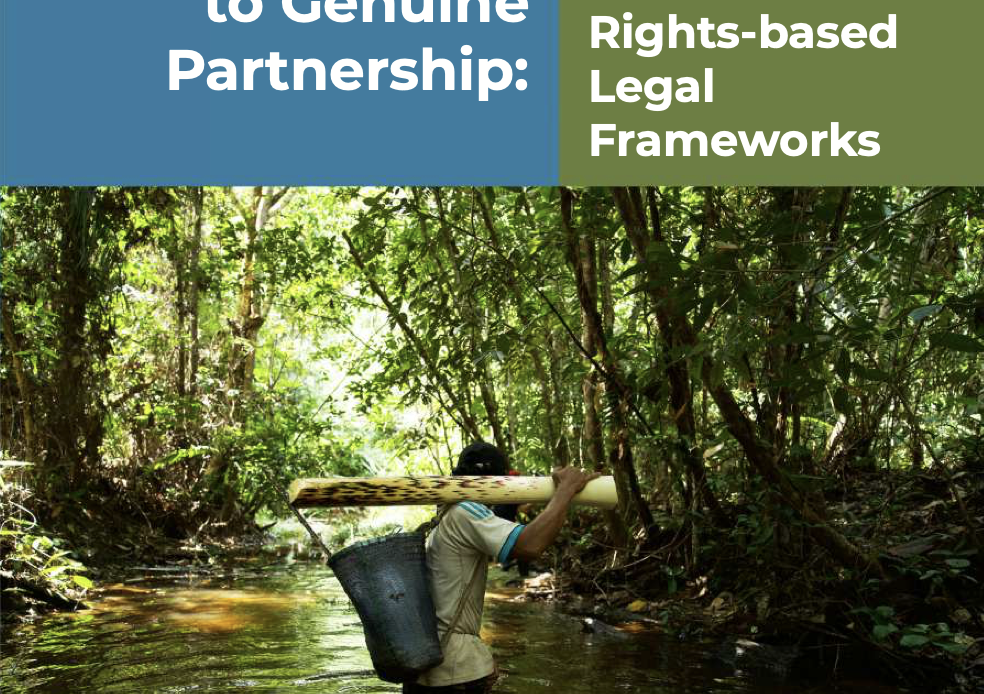
Despite policy-level progress toward a human rights-based approach to conservation, including the recognition and respect of Indigenous Peoples’ rights, Indigenous Peoples Rights International (IPRI) continues to receive reports and complaints from Indigenous Peoples worldwide regarding violations of their fundamental human rights arising from conservation laws and policies. We have examined the impacts of protected areas in this regard, including their role as drivers of violence and criminalization against Indigenous Peoples.[1] Additionally, we analyzed the impacts of tourism, often linked to conservation initiatives at the domestic level on both Indigenous collective and individual rights.[2]
A recurring issue identified in these studies is the lack of alignment between the environmental legal framework and internationally recognized rights of Indigenous Peoples. In many cases, conservation and environmental protection laws and policies not only fail to protect these rights but also actively enable violations of these rights, resulting in the systemic criminalization of Indigenous Peoples.
To further document this, IPRI analyzed the environmental legal and policy framework in 12 countries across Africa, Asia, and Latin America to assess their consistency with international obligations on Indigenous Peoples’ rights.
This report examines the relationship between environmental governance and the rights of Indigenous Peoples in biodiversity-rich countries across Asia, Africa, and Latin America. It analyzes environmental legislation, laws on Indigenous Peoples’ rights, and relevant international obligations—particularly the UNDRIP—to identify legal and policy inconsistencies. It also documents the impacts of these frameworks through selected case studies, highlighting instances of violence, displacement, and criminalization of Indigenous communities. Based on this analysis, the report offers recommendations to strengthen legal harmonization and safeguards to prevent violations of Indigenous Peoples’ rights in the context of environmental protection.
IPRI hopes this report contributes to the legal reforms needed at the domestic level to end the serious human rights violations arising from laws and policies that are inconsistent with the collective and individual rights of Indigenous Peoples. It calls on all actors: states, international institutions, environmental organizations, donors, and others, to commit to this goal.
[1] Indigenous Peoples Rights International. Redefining protected areas: A study on the criminalization of and human rights violations against Indigenous Peoples in conservation, November 2021. https://iprights.org/2022/01/04/global-report-redefining-protected-areas-a-study-on-the-criminalization-of-and-human-rights-violations-against-indigenous-peoples-in-conservation/
[2] Indigenous Peoples Rights International. Submissions to the UN Special Rapporteur on the rights of indigenous peoples on tourism and indigenous peoples’ rights, June 2023. https://iprights.org/index.php/en/component/content/article/submissions-to-the-un-special-rapporteur-on-the-rights-of-indigenous-peoples-on-tourism-and-indigenous-peoples-rights?catid=9&Itemid=102


