
Argentina: Boy of Chañi, the mountain waited for you for over a century
In 1905, an expedition reached the summit of Nevado de Chañi, in the eastern Andes mountain range between the present-day provinces of Jujuy and Salta. At an altitude of almost 5,900 metres, they found the body of an indigenous child accompanied by a ceremonial grave goods. It had been placed there centuries earlier, during the Inca period, as part of a capacocha ceremony: one of the most important rituals in the Andean worldview, through which boys and girls were offered to the sacred mountains, the Apus.
The body was removed from the mountain and taken to Buenos Aires. Since then, it has remained at the “Juan B. Ambrosetti” Ethnographic Museum of the University of Buenos Aires. 119 years have passed.
What became one of the most important discoveries of the early 20th century for Argentine archaeology never ceased to be anything other than that for the indigenous communities of the Puna: an ancestor torn from their ceremonial territory.
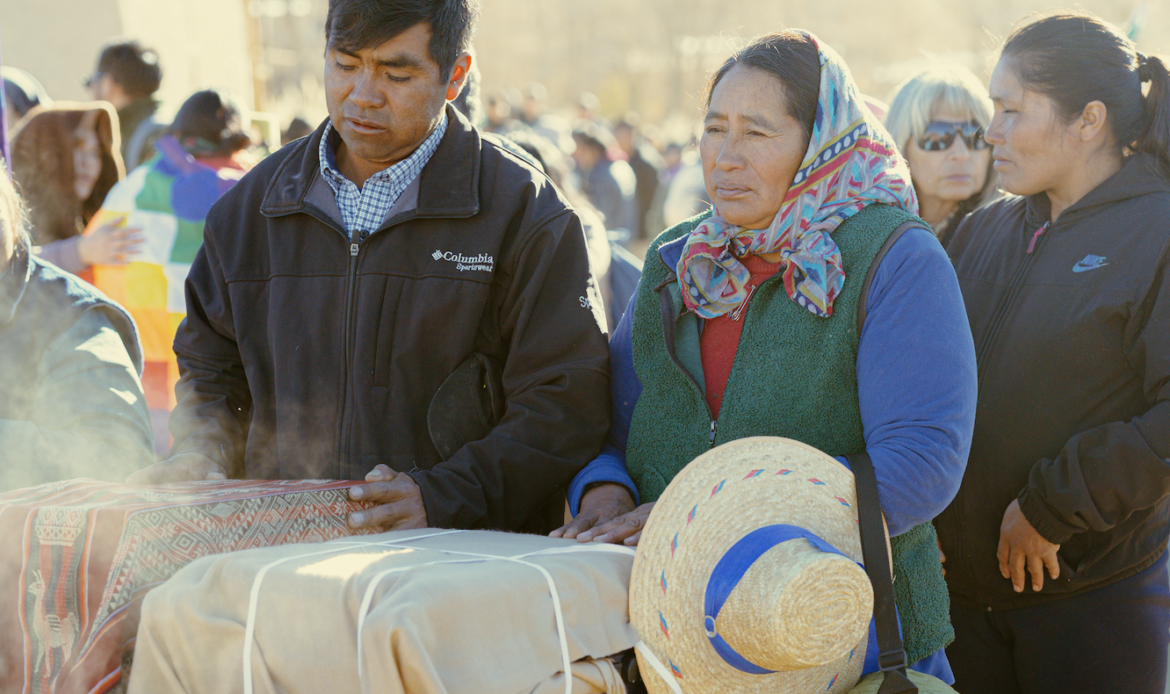
Today, more than a century later, the boy from Chañi is finally returning.
The restitution did not begin in university offices or conservation laboratories. It began in the memory of the communities. In El Moreno and El Angosto — Puna villages situated at the foot of Chañi — the history of the mountain remained alive from generation to generation. Chañi was not an archaeological artefact: it was, and remains, an Apu, a living entity within Andean spirituality.
Archaeological research carried out in recent decades has confirmed the mountain’s ceremonial significance. Studies by Christian Vitry identified ritual paths, ceremonial platforms and structures linked to high-mountain religious practices. Even today, there are fairly precise indications of the possible location where the child may have been originally buried before being exhumed in 1905.
But the call for restitution was not based solely on archaeology. It was also built on the political and organisational persistence of the communities of Puna.
The story of the restitution of the Boy of Chañi
In December 2020, the El Angosto Indigenous Community and the ‘Sol de Mayo’ Indigenous Community Organisation formally submitted a request for restitution to the National Institute of Indigenous Affairs and the National Programme for the Identification and Restitution of Indigenous Human Remains. In that letter, they demanded the return of “the indigenous human remains found on Nevado del Cerro Chañi (our Apu)” and called for them to be returned to their ceremonial territory.
The document is significant not only for its legal content, but also because it marks a historic turning point: the communities set down in writing something that for decades had been largely overlooked in much of Argentina’s official narrative. The boy from Chañi did not belong to a scientific collection or to the heritage of an institution. He belonged to a living history, to a territory and to a people.
The restitution then began to open up a deeper discussion: what does it mean to preserve indigenous human remains in museums? Who has the right to decide on them? Can we speak of heritage when the communities claim that these bodies are ancestors and not scientific objects?
For much of the 20th century, indigenous bodies were exhibited, studied and stored in academic institutions under a colonial logic that severed indigenous peoples from their own spiritual systems. The Chañi case is part of that history.
The very context in which the child’s remains were removed reflects an era marked by scientific expeditions, military campaigns and state-led projects of territorial occupation in the Puna. Historical texts by Eric Boman and other researchers reveal a perspective typical of the early 20th century: indigenous communities were described as isolated populations that needed to be incorporated into the nation state.
However, the communities never disappeared.
Cristina Argañaraz’s work on El Moreno demonstrates precisely that: that, despite processes of dispossession, servitude and marginalisation, the indigenous populations of the puna maintained forms of historical, cultural and territorial continuity throughout the 20th century.
The restitution of the child from Chañi cannot be understood in isolation from this broader history.
That is why the current process is not limited to an administrative transfer of human remains from Buenos Aires to Jujuy. The project promoted by the communities includes ancestral ceremonies, educational initiatives, the construction of a community museum and the collective production of memory.
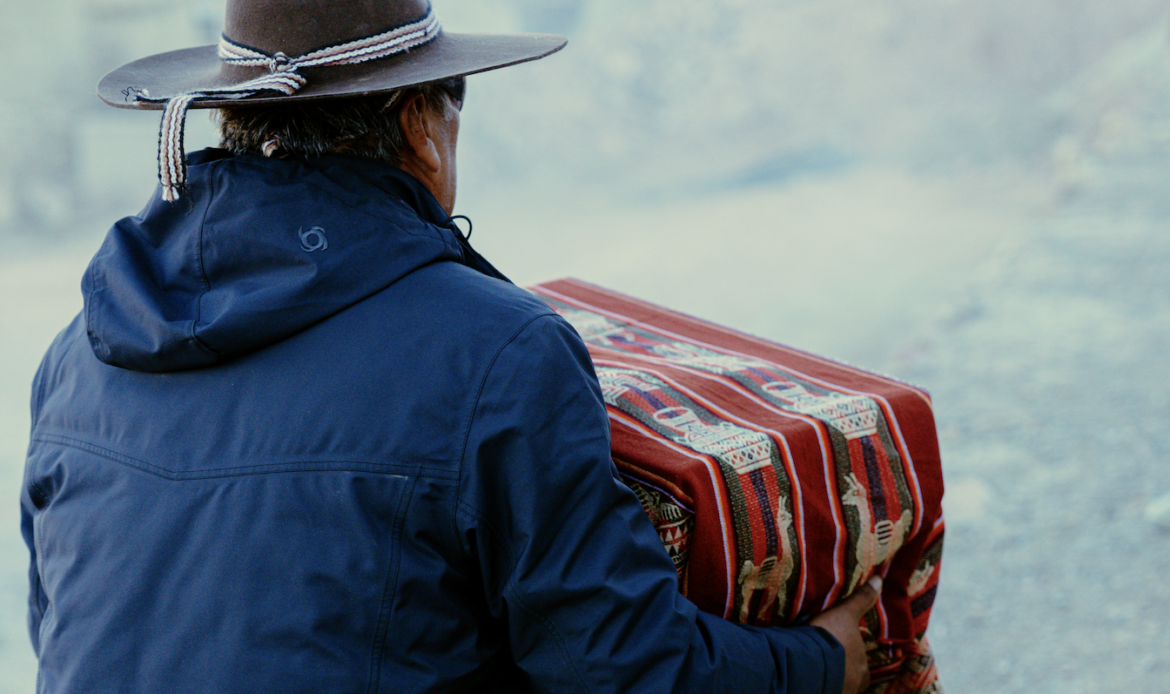
The proposal envisages that the reburial will take place inside a clay pot specially prepared for the return to the ceremonial territory. It also includes textile workshops, educational materials and audiovisual records produced in collaboration with the community.
The images of the ceremonial pots prepared for the restitution encapsulate much of that historical significance. On the still-fresh clay, one can read: “Restitution Wawa Apu Chañi”. Below appear the names of the communities of El Moreno and El Angosto. These are not merely funerary vessels: they are both political and spiritual objects, concrete symbols of a return long awaited by generations.
In July 2024, the Governing Board of the Faculty of Philosophy and Letters at the University of Buenos Aires (UBA) officially approved the return of the Chañi child and the objects that formed part of his ceremonial grave goods. The resolution acknowledges that the body had been held in the museum since 1905 and orders its return to a community of the Kolla people in Jujuy.
What the return of the Chañi Child entails
The gesture has a significant institutional dimension. But for the communities, the significance goes far beyond a university resolution.
The return of the Chañi Child involves re-establishing a link, severed for over a century, between the mountain, the land and the ancestor. It also involves challenging a long-standing Argentine tradition of scientific appropriation of indigenous bodies.
For decades, Latin American museums built up part of their collections using human remains taken from cemeteries, ceremonial sites and indigenous territories. In many cases, these practices were legitimised by scientific discourses that viewed indigenous peoples as objects of study rather than as political and spiritual subjects with rights of their own.
Restitutions are slowly transforming that logic.
It is not merely a matter of reviewing museum collections. It is a matter of reviewing historical power relations.
In the case of Chañi, moreover, there is a deeply symbolic dimension linked to the mountain itself. Christian Vitry’s doctoral thesis describes Chañi as one of the great Andean Apus and documents the existence of ceremonial paths ascending to the summit, ritual platforms and structures associated with high-mountain ceremonies.
In the Andean worldview, mountains are not inert geographical features. They are living, protective entities, capable of establishing connections between communities, territory, water, climate and spirituality. That is why the boy’s return to Chañi is not perceived solely as a human act of historical redress. It is also understood as a spiritual restitution to the mountain itself.
After 119 years, the wawa of Chañi finally returns to his Apu.
_________________________________________________________________________
Offprint | What was the capacocha?
The capacocha was one of the most important ceremonies of the Tawantinsuyu. It consisted of the ritual offering of boys and girls to the Andean deities, especially the Apus, the sacred mountains. These rituals were performed in exceptional circumstances: the death of an Inca, major political events, droughts, conflicts or ceremonies linked to spiritual and territorial balance.
The selected children were considered pure beings and were prepared through lengthy ceremonial rituals before being taken to the high peaks. There they were laid to rest alongside fine textiles, food, feathers, figurines and ritual objects.
One of the best-known cases is that of the Children of Llullaillaco, found in 1999 on the Llullaillaco volcano, at an altitude of 6,739 metres, on the border between Argentina and Chile. There, the frozen bodies of three exceptionally well-preserved Inca children were found: a teenage girl known as ‘La Doncella’, a boy and a young girl, accompanied by an extraordinary ceremonial grave goods.
Due to the extreme cold and dry conditions of the mountain, the bodies were exceptionally well-preserved and can now be seen at the Museum of High Mountain Archaeology (MAAM) in the city of Salta. The museum developed complex technological and scientific conservation systems to maintain environmental conditions similar to those of the high mountains and to preserve both the bodies and the associated ceremonial objects.
The discovery had a huge international impact and enabled further research into Inca rituals, diet, health and high-altitude ceremonies. At the same time, it sparked ethical debates regarding the display of indigenous bodies in museums and the rights of indigenous communities over their ancestors and sacred sites.
_________________________________________________________________________
Offprint | What is known about the boy from Chañi?
Archaeological studies carried out on the body found on Nevado de Chañi indicate that it was a child aged between 5 and 6 years old.
He was found accompanied by a significant ceremonial grave goods collection comprising textiles, sandals, woven bags and various ritual objects linked to Inca high-mountain ceremonies.
Historical records indicate that the body was found in a flexed position and was remarkably well-preserved thanks to the extreme cold and high altitude of Nevado de Chañi.
To date, there have been no biomolecular or genetic studies as comprehensive as those carried out on the Children of Llullaillaco. However, archaeological investigations did confirm that the find was part of a capacocha ceremony held during the Inca period.


